
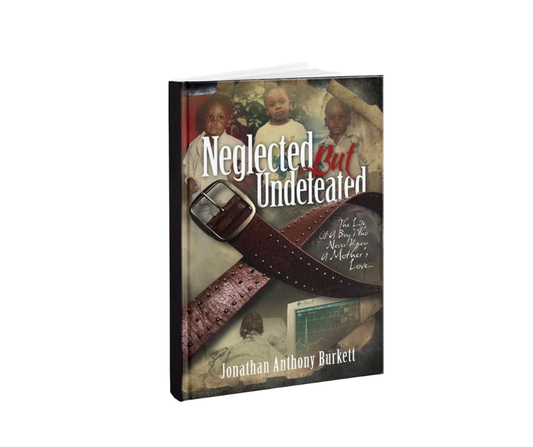
By Jonathan Anthony Burkett
A reflection drawn from my autobiography, Neglected But Undefeated.
A hope at the end of guidance
My poem Your Dream appears in the closing collection of Neglected But Undefeated. It takes the voice of a parent who has offered guidance and now wants a child to develop determination of their own. The poem is not evidence that every event it imagines happened in my household. Poetry can explore a hoped-for role, a question, or a possible relationship. Here, that possibility concerns what it means to prepare another person for a life that will eventually require their own choices.
One brief passage reads, “So now there's one more thing / I want you to be determined toward, in your life.” I have used slashes to mark the line breaks. The poem ends by naming the child's dream. What interests me is the shift from giving instructions to hoping that something has taken root. The speaker wants to see initiative, rather than needing to provide the same direction forever. That hope is understandable, but it also opens a question about whose future is being imagined.
There is a difference between helping a young person discover a goal and choosing a goal so that the adult can feel successful. The two can become confused, especially when a parent has made real sacrifices. Care may be offered with love and still carry assumptions that need examination. Reading the poem gives me a way to consider that tension without pretending there is one conversation that will settle it for every family.
Guidance should make room for a person
A child is not simply an unfinished version of the adult who raises them. They will have interests, abilities, questions, and circumstances that differ from what the adult expected. Paying attention to those differences can make guidance more useful. Advice about a future career or creative goal becomes more grounded when it begins with listening. What does the young person enjoy enough to practice? What have they tried? Which part of the goal do they understand, and which part still needs investigation?
Those questions do not require an adult to approve every plan immediately. They create a better basis for discussing effort, responsibility, cost, and uncertainty. A wish can be respected while still being examined realistically. It helps to distinguish a concern about the plan from a judgment about the person. Telling someone that a goal needs more preparation is different from telling them that they are foolish for having imagined it in the first place.
In the memoir, I describe wanting a loving family and a future with responsibilities I could fulfill well. That desire informs the questions I bring to this poem. I want the imagined act of parenting to include more than provision or authority. It should include interest in who the child is becoming. Providing guidance and remaining open to surprise are not contradictory tasks. Both can express care for a person whose life will continue beyond our supervision.
What independence looks like in practice
Independence often develops through tasks that are smaller than the dream itself. A young person learns to organize time, ask an accurate question, finish something they started, or explain when they need help. These are abilities that can support many futures. They do not require a family to know the final destination in advance. An adult can help a child practice responsibility while allowing their interests to change as they gain experience.
It is also important not to mistake needing support for lacking determination. People have different needs, and independence does not mean that a person must do everything without assistance. A more useful aim may be the ability to participate meaningfully in decisions and recognize what support makes a task possible. A family can encourage agency without setting an impossible standard of total self-sufficiency. Asking for appropriate help can itself be a responsible act.
The poem's movement toward a dream should therefore remain an invitation rather than an ultimatum. A young person may need time to discover what they want. They may try an interest and learn that it does not suit them. That experience can produce useful information, even when it disappoints an earlier expectation. Guidance becomes more dependable when it helps someone interpret experience honestly instead of demanding that every attempt confirm the first plan.
Pride that does not depend on comparison
The speaker in Your Dream wants to feel proud. That feeling can come from a child's achievements, but it can also come from qualities less visible to an audience. Honesty after a mistake, persistence with a difficult task, kindness toward another person, and the willingness to learn may matter deeply. If pride is reserved only for public success, a family may overlook the conduct that makes a responsible life possible in the first place.
Comparison can narrow that attention even further. Another child may reach a milestone earlier or choose a path that sounds more impressive. Those facts do not supply the full measure of a different person's life. A useful conversation returns to the actual individual: their circumstances, effort, decisions, and needs. The point is not to deny achievement. It is to prevent achievement from becoming the only language through which affection or approval can be expressed.
There is room for adults to keep learning as well. A parent may need to revise advice when circumstances change or admit that they do not understand a particular field. Saying that honestly can show a child how responsible uncertainty works. It is possible to remain involved without claiming expertise in everything. The relationship can become a place where questions are examined together, rather than a stage on which one person must always appear to know the answer.
I read Your Dream as a poem about what care hopes to make possible. Guidance has value when it helps another person build a life with purpose, rather than simply repeat someone else's choices. The dream at the end belongs to the child, and the adult's task includes making room for that ownership. That is a demanding form of love. It asks for effort, patience, and the willingness to remain interested when the future takes an unexpected shape.
Read Neglected But Undefeated and explore more of my quotes.
#upstormed #jonathananthonyburkett #jonathanburkett #NeglectedButUndefeated #Poetry


Leave a Reply