
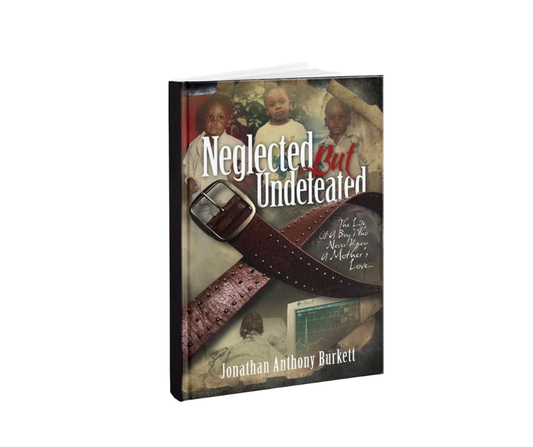
By Jonathan Anthony Burkett
A reflection drawn from my autobiography, Neglected But Undefeated.
An answer in the closing pages
Near the end of Neglected But Undefeated, I ask what I have sacrificed and answer with street pride. That phrase names something I had come to recognize as a danger to the future I wanted. It was not the same as self-respect. It was the pressure to look untouchable, to answer every challenge, and to worry about how a crowd might interpret a decision to walk away. In the memoir, I describe deciding that this kind of pride could leave me imprisoned or dead.
That is an admission about my own thinking. It is not a claim that everyone who has lived on the streets shares one personality, or that a difficult background determines what someone will become. My account includes people in unstable circumstances who offered encouragement, food, knowledge, and kindness. Some warned me against repeating choices they regretted. Their presence complicates the easy categories people sometimes use to explain a life they have not taken time to understand.
What I had to examine was the relationship between an immediate reaction and the future I said I wanted. Did a particular response move me toward stability, meaningful work, and a loving family? Or did it satisfy a demand to look strong for a few minutes while making those hopes harder to reach? Those questions did not erase my anger. They gave me a different way to evaluate what I might do with it.
The audience does not live the consequence
A crowd can make an unnecessary decision feel urgent. Somebody laughs, challenges you, or expects a reaction, and suddenly the issue seems to be whether you will lose standing in front of others. The consequences can last long after the audience has moved on. In my book, people urge me to think beyond what others say about me. Their advice asks who will actually be present when the performance is over and the real cost begins.
This does not mean every criticism should be ignored. Sometimes another person sees something we need to reconsider. The distinction is between information that can help us act responsibly and pressure that only asks us to prove ourselves. A useful challenge can usually be discussed in terms of the actual situation. A demand for a display of toughness often becomes less clear when we ask what useful outcome the display is supposed to produce.
I also had to recognize that refusing an unnecessary confrontation would not automatically feel good. A habit can continue to make its demands after a person has understood its costs. There may be embarrassment, restlessness, or the temptation to explain the decision to everyone. Those feelings do not have to settle the question. The future at stake may deserve more weight than the discomfort of being misunderstood for a while.
Self-respect can make a quieter choice
The kind of self-respect I wanted to build required responsibility for my own conduct. That includes acknowledging the choices I describe in the memoir without making my past an excuse for every later action. Understanding a source of anger and taking responsibility for a response are different tasks. Both can matter. A truthful story makes room for what happened to a person and for what that person later decides to do.
Responsibility can sound abstract until it becomes a particular action. It may mean leaving a situation before it becomes a confrontation, choosing different company, correcting something you said, or asking for help with a problem you cannot handle alone. None of those choices needs to become a public performance of personal growth. The people most affected by our conduct may care much more about consistent behavior than about an impressive explanation of our intentions.
It also matters to distinguish walking away from accepting harm. A person may need protection, support, or a clear boundary. This reflection is not an instruction to remain silent when something is wrong. It is a question about how to act in a way that protects life and keeps meaningful options open. There can be strength in a response that seeks safety and accountability without turning the moment into a contest over who can cause more damage.
Choosing the people who can challenge you
Some of the most valuable words in my story come from people who refuse to treat my difficult circumstances as the whole explanation of my future. They can recognize pain and still expect something better from my choices. That combination matters. Sympathy without any confidence in a person's agency can become limiting. Demands without any understanding can become another source of distance. I valued encouragement that asked me to change while still seeing me as a person worth helping.
No individual should be expected to provide every form of support. A friend may be able to listen but unable to offer housing or professional advice. A mentor may help with a practical decision without knowing every part of the past. Accepting those limits can make relationships more dependable. We can appreciate what someone actually offers instead of measuring them against the imagined person who would always know the answer and never have needs of their own.
Leaving street pride behind also changes the way I understand achievement. Success cannot only mean becoming visible or proving a critic wrong. A life spent reacting to critics is still organized around them. I wanted goals with their own substance: writing, stability, useful work, family, and the ability to be present for people. Those goals offer a direction that does not need an opponent in order to matter.
The closing answer in my memoir is brief, but the work behind it is not. Giving up a harmful form of pride asks a person to examine habits, relationships, and the stories they tell themselves about strength. I share the answer because it marks a choice about what I wanted to protect. There were possibilities ahead of me worth more than the approval of a crowd. Respecting those possibilities meant learning to make a different kind of decision.
Read Neglected But Undefeated and explore more of my quotes.
#upstormed #jonathananthonyburkett #jonathanburkett #NeglectedButUndefeated #LifeLessons


Leave a Reply