
Tag: Poetry

  • Blessed: Remembering the People Who Helped Me Stand Again

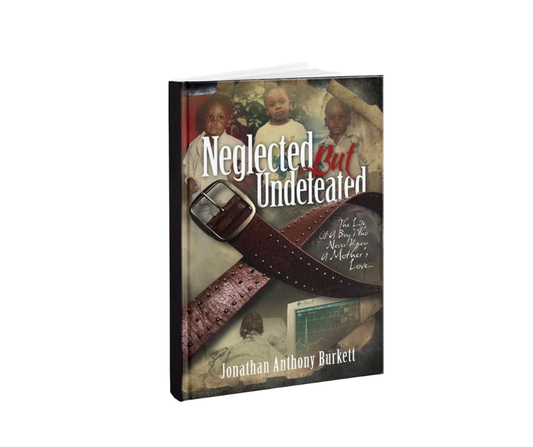
    Neglected But Undefeated — official book cover
    Neglected But Undefeated — Jonathan Anthony Burkett. Official cover, Upstormed.

    By Jonathan Anthony Burkett

    A reflection drawn from my autobiography, Neglected But Undefeated.

    A word that includes other people

    In the poem Blessed, near the end of Neglected But Undefeated, I describe gratitude for the love and guidance people brought into my life. The poem matters because it does not leave survival entirely in my own hands. There are people in the story who notice, encourage, offer help, or remain present when I am struggling to see a future. The word blessed carries that recognition, alongside the Christian faith through which I understand the journey.

    One short excerpt reads, “I am happy and thankful / For all the love and guidance / Many came into my life / Delivering unto me.” The slashes indicate the original line breaks. The language turns attention outward. It recognizes that help arrived through actual people, sometimes when I was not ready to receive it well. That is a more demanding kind of gratitude than a general statement that life eventually improved. It asks me to remember who contributed and what their contribution made possible.

    I do not read the poem as a claim that every hardship was necessary or that suffering automatically produces a reward. It records a personal response to what I had lived through and to the care I had received. A person can be thankful for help without being thankful for the circumstances that made the help necessary. Keeping that distinction clear allows gratitude to remain honest instead of turning it into an instruction to call every painful experience a gift.

    Help has ordinary forms

    In the acknowledgments of my autobiography, I thank relatives, my brothers, medical staff, friends, people who offered food or shelter, and others who encouraged me. Some contributions were practical and immediate. Others helped me imagine a different direction. Those forms of support are not interchangeable. A meal does something different from advice, and medical care does something different from companionship. Each deserves to be understood in relation to the need it actually met.

    That is one reason specific gratitude can be powerful. Saying that someone gave you a place to rest recognizes their act more clearly than describing them only as an inspiration. It also reminds a reader that care has material forms. We can speak beautifully about helping one another while overlooking the ride, appointment, phone call, or ordinary task that would make a real difference. Attention to the practical details keeps the idea of kindness connected to the circumstances of a life.

    Some people who helped me were themselves living through difficult circumstances. I do not want their kindness erased by a simple category placed around them. A person can have problems and still offer another person something valuable. The memoir includes that complexity. It is possible to appreciate a contribution without claiming that the giver had every answer or lived without mistakes. Gratitude becomes more truthful when it allows the other person to remain fully human.

    Receiving care was not always easy

    My story also describes defensiveness and times when I insisted that I did not need help. I want to keep that part in view when discussing gratitude. It is easy to imagine receiving kindness as a graceful scene in which everyone says the right thing. In life, an offer may meet pride, uncertainty, embarrassment, or an expectation of disappointment. The person offering support may not immediately see what their effort means, or whether it has made any difference.

    Recognizing that difficulty does not give a recipient permission to mistreat a helper. It does give us reason to avoid judging the value of every act by the first response it receives. Some words become meaningful later. A practical kindness may be remembered after a person has enough stability to think about it clearly. Where boundaries and circumstances allow, support can remain patient without becoming unlimited. The helper is also a person with needs and responsibilities.

    For someone learning to accept care, a useful beginning may be an accurate description of what would help. A person does not have to tell their whole history in order to ask a specific question. They can also say what they are not ready to discuss. An honest limit can make assistance clearer for everyone involved. Receiving help does not require surrendering all privacy, and offering help should not make another person's story a possession.

    How gratitude can move forward

    Gratitude can lead to a thank-you, but it can also influence how we treat somebody else. The exact act may not be repeatable. A person who received hospital care will not necessarily become a medical professional. Someone helped with housing may not have a spare room to offer. There may still be another contribution within reach: careful attention, useful information, a small practical task, or a dependable response to someone who needs one.

    It is important to keep those offers proportionate. Wanting to repay all the kindness in your life at once can lead to promises you cannot sustain. A smaller action, completed honestly, may be more useful. The purpose is not to create a flattering story about being generous. It is to notice another person's actual need and consider whether you can help without taking away their voice or making them responsible for your sense of purpose.

    The poem's title also reminds me to look at what is present before measuring what is missing. That does not mean ignoring loss, unfairness, or unfinished work. It means giving accurate attention to both. A day can contain difficulty and a meaningful act of care. A future can remain uncertain while still containing possibilities worth protecting. Gratitude is more dependable when it can acknowledge that complexity rather than requiring a cheerful account of every circumstance.

    Blessed belongs near the close of the book because it helps explain the direction I want to carry beyond its final pages. I want the help I received to remain part of how I understand my life. Remembering those people keeps the story connected to more than endurance. It connects it to relationship, responsibility, faith, and the hope that something offered to me can become care I offer wisely in another person's life.

    Read Neglected But Undefeated and explore more of my quotes.

    #upstormed #jonathananthonyburkett #jonathanburkett #NeglectedButUndefeated #Poetry

  • Your Dream: A Poem About the Future a Parent Cannot Choose

    Neglected But Undefeated — official book cover
    Neglected But Undefeated — Jonathan Anthony Burkett. Official cover, Upstormed.

    By Jonathan Anthony Burkett

    A reflection drawn from my autobiography, Neglected But Undefeated.

    A hope at the end of guidance

    My poem Your Dream appears in the closing collection of Neglected But Undefeated. It takes the voice of a parent who has offered guidance and now wants a child to develop determination of their own. The poem is not evidence that every event it imagines happened in my household. Poetry can explore a hoped-for role, a question, or a possible relationship. Here, that possibility concerns what it means to prepare another person for a life that will eventually require their own choices.

    One brief passage reads, “So now there's one more thing / I want you to be determined toward, in your life.” I have used slashes to mark the line breaks. The poem ends by naming the child's dream. What interests me is the shift from giving instructions to hoping that something has taken root. The speaker wants to see initiative, rather than needing to provide the same direction forever. That hope is understandable, but it also opens a question about whose future is being imagined.

    There is a difference between helping a young person discover a goal and choosing a goal so that the adult can feel successful. The two can become confused, especially when a parent has made real sacrifices. Care may be offered with love and still carry assumptions that need examination. Reading the poem gives me a way to consider that tension without pretending there is one conversation that will settle it for every family.

    Guidance should make room for a person

    A child is not simply an unfinished version of the adult who raises them. They will have interests, abilities, questions, and circumstances that differ from what the adult expected. Paying attention to those differences can make guidance more useful. Advice about a future career or creative goal becomes more grounded when it begins with listening. What does the young person enjoy enough to practice? What have they tried? Which part of the goal do they understand, and which part still needs investigation?

    Those questions do not require an adult to approve every plan immediately. They create a better basis for discussing effort, responsibility, cost, and uncertainty. A wish can be respected while still being examined realistically. It helps to distinguish a concern about the plan from a judgment about the person. Telling someone that a goal needs more preparation is different from telling them that they are foolish for having imagined it in the first place.

    In the memoir, I describe wanting a loving family and a future with responsibilities I could fulfill well. That desire informs the questions I bring to this poem. I want the imagined act of parenting to include more than provision or authority. It should include interest in who the child is becoming. Providing guidance and remaining open to surprise are not contradictory tasks. Both can express care for a person whose life will continue beyond our supervision.

    What independence looks like in practice

    Independence often develops through tasks that are smaller than the dream itself. A young person learns to organize time, ask an accurate question, finish something they started, or explain when they need help. These are abilities that can support many futures. They do not require a family to know the final destination in advance. An adult can help a child practice responsibility while allowing their interests to change as they gain experience.

    It is also important not to mistake needing support for lacking determination. People have different needs, and independence does not mean that a person must do everything without assistance. A more useful aim may be the ability to participate meaningfully in decisions and recognize what support makes a task possible. A family can encourage agency without setting an impossible standard of total self-sufficiency. Asking for appropriate help can itself be a responsible act.

    The poem's movement toward a dream should therefore remain an invitation rather than an ultimatum. A young person may need time to discover what they want. They may try an interest and learn that it does not suit them. That experience can produce useful information, even when it disappoints an earlier expectation. Guidance becomes more dependable when it helps someone interpret experience honestly instead of demanding that every attempt confirm the first plan.

    Pride that does not depend on comparison

    The speaker in Your Dream wants to feel proud. That feeling can come from a child's achievements, but it can also come from qualities less visible to an audience. Honesty after a mistake, persistence with a difficult task, kindness toward another person, and the willingness to learn may matter deeply. If pride is reserved only for public success, a family may overlook the conduct that makes a responsible life possible in the first place.

    Comparison can narrow that attention even further. Another child may reach a milestone earlier or choose a path that sounds more impressive. Those facts do not supply the full measure of a different person's life. A useful conversation returns to the actual individual: their circumstances, effort, decisions, and needs. The point is not to deny achievement. It is to prevent achievement from becoming the only language through which affection or approval can be expressed.

    There is room for adults to keep learning as well. A parent may need to revise advice when circumstances change or admit that they do not understand a particular field. Saying that honestly can show a child how responsible uncertainty works. It is possible to remain involved without claiming expertise in everything. The relationship can become a place where questions are examined together, rather than a stage on which one person must always appear to know the answer.

    I read Your Dream as a poem about what care hopes to make possible. Guidance has value when it helps another person build a life with purpose, rather than simply repeat someone else's choices. The dream at the end belongs to the child, and the adult's task includes making room for that ownership. That is a demanding form of love. It asks for effort, patience, and the willingness to remain interested when the future takes an unexpected shape.

    Read Neglected But Undefeated and explore more of my quotes.

    #upstormed #jonathananthonyburkett #jonathanburkett #NeglectedButUndefeated #Poetry

  • What My Poem Words Asks of Us: Attention, Understanding, and Care

    Jonathan Anthony Burkett wearing a dark shirt and blue tie
    Jonathan Anthony Burkett. Photograph supplied by the author.

    By Jonathan Anthony Burkett

    A reflection drawn from my autobiography, Neglected But Undefeated.

    A poem about what language does

    My poem Words appears in the closing poetry collection of Neglected But Undefeated. Its subject is familiar enough to be overlooked: the language we use with one another, and the effect that language can have. The poem moves through love, hurt, trust, attention, and the hope of people coming together. It does not treat words as decoration. It asks us to notice that speech participates in a relationship and can change what another person believes is possible within it.

    One short passage reads: “Help one another in our lives / With our attention and words.” The slashes here mark the poem's line breaks. I return to that pairing because attention gives language its context. A kind sentence spoken without listening may miss the actual need. Attention without any response can also leave a person unsure whether they were heard. The poem places the two together, suggesting that care involves both noticing and finding a way to respond.

    This article is a reflection on the poem, rather than a claim that a few encouraging sentences can solve every difficulty. People also need practical help, resources, safety, time, and sometimes professional support. Words can describe those needs accurately, connect a person with help, or make a conversation possible. They become less useful when they replace action with a reassuring sound that asks nothing further of the speaker.

    The responsibility to understand first

    Listening can be harder than preparing an answer. When someone begins describing a problem, it is easy to compare it with our own experience and start arranging advice. Sometimes the comparison will help. Sometimes it will lead away from what the person is actually trying to say. A useful beginning is to ask what kind of response they want and to allow enough room for the answer to change our original assumption.

    The person speaking may not yet know what they need. They may be trying to separate several concerns, or working out why a particular event affected them so strongly. A conversation does not have to become an interrogation in order to be clear. One patient question can be enough to open the next part of the thought. It helps when the question seeks understanding rather than evidence for a judgment that has already been made.

    My autobiography describes how much the feeling of being heard mattered to me. That experience informs the attention I bring to this poem. I do not assume that another person's silence means the same thing mine once meant, or that my history gives me the explanation of their life. The more responsible connection is a reminder to remain curious. Experience can teach us to ask better questions without giving us the right to answer every question for someone else.

    Encouragement that leaves room for reality

    Encouragement is more credible when it can acknowledge the difficulty in front of a person. A quick assurance that everything will work out may sound comforting, but it can also close a conversation before the uncertainty has been named. There are times when a more honest response is to admit what we do not know and then identify the part we can help with. Hope does not require pretending that an outcome is guaranteed.

    The same care applies to promises. Telling someone you will call, visit, or help with a task gives them information they may use to arrange their day. If circumstances change, an accurate update matters. Words build trust partly through what happens after them. Following through on a modest offer may communicate more care than making a dramatic promise that disappears when it becomes inconvenient. The size of the declaration is not the best measure of its value.

    There is also a difference between recognizing someone's effort and demanding that they perform optimism. A person can be grateful for support and still feel tired, disappointed, or uncertain. A kind conversation leaves room for that complexity. It does not require the listener to agree with every conclusion, but it does require respect for the reality that someone is trying to express. Care can remain present while a difficult feeling remains unresolved.

    Reading the poem in everyday life

    Poetry can give us a phrase worth carrying into an ordinary day. It can also slow down a familiar idea long enough for us to examine it. When I read the pairing of attention and words, I think about a family conversation, a message to a friend, or the way we respond when someone makes a mistake. In each setting, language can help clarify what happened without reducing a person to the worst moment we have seen.

    That does not mean every conversation must continue indefinitely. Attention includes recognizing limits. Someone may need time to think, a boundary around a subject, or a different setting in which to talk. Respecting that request is part of caring about the person rather than only wanting access to their story. A conversation becomes more trustworthy when participation is not treated as a debt somebody owes because we have offered to listen.

    For readers who want to reflect on Words, there are a few questions to carry away. When did somebody's careful attention make a difference to you? Which promise could you make smaller and more dependable? Is there a person you have been answering before you have understood their question? These are invitations to notice a specific relationship. They do not require a public confession or a dramatic statement about becoming a completely different person overnight.

    The poem's hope is that people can help one another move toward greater understanding. I want the writing I share to contribute to that work through truthful language, appropriate boundaries, and care for the reader. A sentence cannot take the place of a whole relationship. It can become one responsible act within it. Attention gives us a better chance of choosing that act wisely, and words give us a way to make it visible.

    Read Neglected But Undefeated, explore my books and more of my quotes.

    #upstormed #jonathananthonyburkett #jonathanburkett #NeglectedButUndefeated #Poetry