“Rejection pointed me in the right direction: straight to God.”
— Jonathan Anthony Burkett
Rejection hurts. There is no way around it. A “no” from a job, a friend who walks away, a relationship that ends, a family member who closes the door: each one can feel like a judgment on who we are. We replay the conversation. We wonder what is wrong with us. We start to believe we will always be on the outside looking in.
But this quote invites us to look at rejection from a different angle. What if the closed door was not the end of the road, but a sign pointing somewhere better? What if being turned away by people was the very thing that turned us toward God?
Rejection is a redirection
When everything is going our way, it is easy to lean on people, plans and our own strength. We may not mean to leave God out, but we don’t feel much need for Him. Rejection changes that quickly. When the people we were counting on say no, we finally look up.
That is not a punishment. It is an invitation. The hurt is real, but so is the direction it gives us. Many people can tell you that their deepest walk with God started on the day someone else let them go.
What God offers that people can’t
People’s acceptance changes with their mood, their needs and their own wounds. God’s acceptance doesn’t. He does not love you more on your good days or less on your bad ones. He does not keep a list of reasons to walk away.
When we bring our rejection to Him, He doesn’t tell us we deserved it. He reminds us who we are: chosen, wanted and loved. That truth does not erase the pain overnight, but it gives the pain somewhere to go.
How to let rejection point you to God
Tell Him exactly how it felt. You don’t have to dress it up. God can handle honest prayers.
Refuse to make the rejection your name. Someone’s “no” describes a moment, not your worth.
Look for the open door. Ask God to show you where He is leading now that this path has closed.
Stay soft. Rejection tempts us to build walls. Let God heal the hurt so you can still love people well.
Remember the times He came through. The God who carried you before will carry you again.
The stone they turned away
The Bible is full of people who were rejected and then used mightily by God. Joseph was sold by his brothers. David was overlooked by his own family. Jesus Himself was rejected by the very people He came to save. Scripture puts it this way:
“The stone which the builders refused is become the head stone of the corner.” — Psalm 118:22 (KJV)
What people throw away, God builds on. The rejection that seemed to say “you’re not good enough” can become the cornerstone of a stronger faith and a better future.
So if you have been turned away recently, don’t let that “no” push you into a corner. Let it point you up. Rejection may have closed a door, but it also cleared the path straight to God, and that is the best direction you could ever go.
“Nobody showed up for me as a child, but God never missed a single day.”
— Jonathan Anthony Burkett
Some people grow up with a crowd in the bleachers. Somebody is at every game, every school play, every birthday. Others grow up looking at empty seats. If that was you, you know the feeling. You learn early to stop looking toward the door, because nobody is coming through it.
This quote is honest about that. It does not pretend the empty seats were full. It names the hurt plainly: nobody showed up. But it doesn’t stop there. It points to the One who was there the whole time, even when a child couldn’t see Him yet.
When people miss, God doesn’t
People fail each other. Sometimes it is because they are hurting themselves. Sometimes it is because they never learned how to love well. Sometimes there is no good reason at all. A child doesn’t understand any of that. A child just knows that the people who were supposed to show up didn’t.
God’s attendance record is different. He was there on the mornings that started with nobody saying good morning. He was there on the nights that ended without anyone saying goodnight. He was there in the classroom, on the walk home, and in the quiet room where a young heart wondered if anyone cared. He never missed a single day.
You may not have felt Him at the time. Most of us don’t recognize His hand until we look back. But looking back is exactly where faith often grows. You start to see the protection you didn’t notice, the people He sent at just the right moment, and the strength that kept you going when you had every reason to quit.
Your story didn’t end at the empty seat
Being overlooked as a child can follow you into adulthood. It can whisper that you don’t matter, that you have to earn love, or that people will always leave. Those whispers are loud, but they are not the truth.
The truth is that you were seen the whole time. The God who watched over you then is the same God who is with you now. He is not finished with your story, and the empty seats of your childhood do not get to write the ending.
Becoming the one who shows up
One of the most powerful ways to heal from being left alone is to make sure someone else isn’t. Here are a few ways to turn that old pain into purpose:
Show up for your own children. Be at the game, the recital, the bedtime prayer. Your presence breaks the pattern.
Notice the kid nobody notices. A word of encouragement to a child in your church, your neighborhood or your family can mean more than you will ever know.
Talk to God about the old hurt. Bring Him the memories. He was there for them, so He understands them better than anyone.
Let safe people in. You don’t have to carry everything alone anymore. Healthy friends and family can be part of how God keeps showing up.
A promise for the overlooked
King David knew what it felt like to be passed over. When the prophet came to his family, David was left out in the field. Later he wrote these words:
“When my father and my mother forsake me, then the LORD will take me up.” — Psalm 27:10 (KJV)
That is a promise for every child who waited at the window. Even when the people closest to you let go, God takes you up. He carries you. He claims you as His own.
So if your childhood had more empty seats than full ones, hear this today: you were never as alone as you felt. God was there every single day, and He is still here. Let that truth heal what it can, and then go be the person who shows up for somebody else.
“You know my name, not my story. You’ve heard what I’ve done, but not what I’ve been through.” — Jonathan Anthony Burkett, Neglected But Undefeated
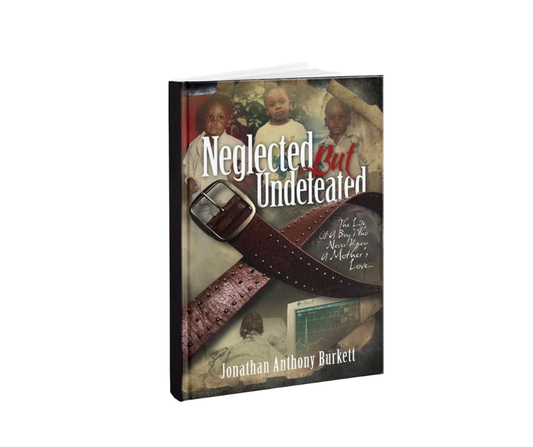
Some words are written. Others are lived first and written later. This quote is one of the second kind. It comes from Jonathan Anthony Burkett’s memoir, Neglected But Undefeated: The Life Of A Boy Who Never Knew A Mother’s Love, and it has traveled far beyond the pages of the book. People share it on social media, write it in journals and quote it to friends, often without knowing where it came from. This is the story behind it.
Where the quote comes from
Jonathan was born in Florida in 1987. He spent his early childhood with his grandparents in Jamaica, a happy and loving season of his life. At six, he moved back to the United States to live with his mother, and his life changed. His memoir tells, honestly, about a childhood of neglect and abuse, about being homeless as a teenager, and about facing brain surgery in January 2006 for a disorder that caused seizures.
To the people around him, Jonathan was just a name. Classmates, neighbors and strangers saw a boy, a young man, a set of choices and mistakes. Very few of them knew what he was carrying. That gap between what people see and what a person has survived is exactly what this quote captures.
What the quote means
“You know my name, not my story.” A name is the smallest thing we know about someone. It tells us who they are on paper, not who they are inside. Behind every name is a history that most people never hear.
“You’ve heard what I’ve done, but not what I’ve been through.” We are quick to judge people by their actions, especially their worst ones. But actions grow out of experiences. Pain, fear, loss and survival shape the way people live. Until we know what someone has been through, our judgments are guesses.
The quote is not an excuse for wrong choices. It is an invitation to compassion before judgment. It asks us to slow down, to listen and to remember that everyone is fighting battles we cannot see.
Why it speaks to so many people
It gives a voice to the misunderstood. Anyone who has been labeled, gossiped about or written off can feel seen in these words.
It reminds us to be kind. The person who seems difficult may be carrying something heavy.
It honors survival. It quietly says: I have been through things you don’t know about, and I am still here.
From neglected to undefeated
The title of Jonathan’s memoir says the rest of the story. He was neglected, but he was not defeated. Through faith, writing and determination, he forgave his mother, refused to give up and went on to become an author, songwriter, poet and the founder of Upstormed LLC. In his own words from the same book: “Faith is why I’m here today and faith is why I made it through.”
“Judge not according to the appearance, but judge righteous judgment.” (John 7:24)
How to live this quote
Ask before you assume. When someone frustrates you, ask yourself what they might be going through.
Listen to people’s stories. Some of the strongest people you will ever meet are the quietest about what they survived.
Tell your own story. Your story can free someone else. Jonathan’s did.
Share it, and credit it
If these words mean something to you, share them, and please include the name: Jonathan Anthony Burkett. Every time the quote is shared with its author’s name, more people can find the full story behind it.
Neglected But Undefeated — Jonathan Anthony Burkett. Official cover, Upstormed.
By Jonathan Anthony Burkett
A reflection drawn from my autobiography, Neglected But Undefeated.
An answer in the closing pages
Near the end of Neglected But Undefeated, I ask what I have sacrificed and answer with street pride. That phrase names something I had come to recognize as a danger to the future I wanted. It was not the same as self-respect. It was the pressure to look untouchable, to answer every challenge, and to worry about how a crowd might interpret a decision to walk away. In the memoir, I describe deciding that this kind of pride could leave me imprisoned or dead.
That is an admission about my own thinking. It is not a claim that everyone who has lived on the streets shares one personality, or that a difficult background determines what someone will become. My account includes people in unstable circumstances who offered encouragement, food, knowledge, and kindness. Some warned me against repeating choices they regretted. Their presence complicates the easy categories people sometimes use to explain a life they have not taken time to understand.
What I had to examine was the relationship between an immediate reaction and the future I said I wanted. Did a particular response move me toward stability, meaningful work, and a loving family? Or did it satisfy a demand to look strong for a few minutes while making those hopes harder to reach? Those questions did not erase my anger. They gave me a different way to evaluate what I might do with it.
The audience does not live the consequence
A crowd can make an unnecessary decision feel urgent. Somebody laughs, challenges you, or expects a reaction, and suddenly the issue seems to be whether you will lose standing in front of others. The consequences can last long after the audience has moved on. In my book, people urge me to think beyond what others say about me. Their advice asks who will actually be present when the performance is over and the real cost begins.
This does not mean every criticism should be ignored. Sometimes another person sees something we need to reconsider. The distinction is between information that can help us act responsibly and pressure that only asks us to prove ourselves. A useful challenge can usually be discussed in terms of the actual situation. A demand for a display of toughness often becomes less clear when we ask what useful outcome the display is supposed to produce.
I also had to recognize that refusing an unnecessary confrontation would not automatically feel good. A habit can continue to make its demands after a person has understood its costs. There may be embarrassment, restlessness, or the temptation to explain the decision to everyone. Those feelings do not have to settle the question. The future at stake may deserve more weight than the discomfort of being misunderstood for a while.
Self-respect can make a quieter choice
The kind of self-respect I wanted to build required responsibility for my own conduct. That includes acknowledging the choices I describe in the memoir without making my past an excuse for every later action. Understanding a source of anger and taking responsibility for a response are different tasks. Both can matter. A truthful story makes room for what happened to a person and for what that person later decides to do.
Responsibility can sound abstract until it becomes a particular action. It may mean leaving a situation before it becomes a confrontation, choosing different company, correcting something you said, or asking for help with a problem you cannot handle alone. None of those choices needs to become a public performance of personal growth. The people most affected by our conduct may care much more about consistent behavior than about an impressive explanation of our intentions.
It also matters to distinguish walking away from accepting harm. A person may need protection, support, or a clear boundary. This reflection is not an instruction to remain silent when something is wrong. It is a question about how to act in a way that protects life and keeps meaningful options open. There can be strength in a response that seeks safety and accountability without turning the moment into a contest over who can cause more damage.
Choosing the people who can challenge you
Some of the most valuable words in my story come from people who refuse to treat my difficult circumstances as the whole explanation of my future. They can recognize pain and still expect something better from my choices. That combination matters. Sympathy without any confidence in a person's agency can become limiting. Demands without any understanding can become another source of distance. I valued encouragement that asked me to change while still seeing me as a person worth helping.
No individual should be expected to provide every form of support. A friend may be able to listen but unable to offer housing or professional advice. A mentor may help with a practical decision without knowing every part of the past. Accepting those limits can make relationships more dependable. We can appreciate what someone actually offers instead of measuring them against the imagined person who would always know the answer and never have needs of their own.
Leaving street pride behind also changes the way I understand achievement. Success cannot only mean becoming visible or proving a critic wrong. A life spent reacting to critics is still organized around them. I wanted goals with their own substance: writing, stability, useful work, family, and the ability to be present for people. Those goals offer a direction that does not need an opponent in order to matter.
The closing answer in my memoir is brief, but the work behind it is not. Giving up a harmful form of pride asks a person to examine habits, relationships, and the stories they tell themselves about strength. I share the answer because it marks a choice about what I wanted to protect. There were possibilities ahead of me worth more than the approval of a crowd. Respecting those possibilities meant learning to make a different kind of decision.
Neglected But Undefeated — Jonathan Anthony Burkett. Official cover, Upstormed.
By Jonathan Anthony Burkett
A reflection drawn from my autobiography, Neglected But Undefeated.
A memory with people inside it
In Neglected But Undefeated, I remember my grandmother's shop in front of our home in Jamaica. People knew her through that shop, and I remember her smiling and encouraging me to appreciate what I had. As a child, I did not always understand that outlook. I heard people talking about making money, and I wondered how someone could remain so thankful without having much of it. Her happiness challenged an explanation of success that I had barely begun to question.
That memory stays with me because the shop was part of a larger world of people. My grandparents, relatives, neighbors, and familiar faces gave everyday life its shape. I was not taking notes for a business book. I was a child noticing who came around, how people spoke, and how it felt to be surrounded by family. The meaning of the place came through those experiences, rather than through a calculation of what everything might be worth.
Looking back, I can distinguish appreciation from the idea that material needs do not matter. Food, housing, clothing, and stability matter greatly. My own story gives me no reason to dismiss them. The question my grandmother's example leaves with me concerns what money can and cannot describe. A household can need more resources and still contain relationships worth appreciating. Naming what is valuable does not require pretending that practical difficulties have already been solved.
What a child notices about wealth
As a boy, I associated wealth with the possibility of having more freedom and fewer problems. I do not think that wish requires a complicated explanation. When people around you speak about making money, money can begin to look like the answer to almost every question. What I understood less clearly was the difference between wanting resources for a purpose and allowing the idea of wealth to become the only description of a worthwhile life.
My grandmother's advice pointed toward people who were already beside me. Her gratitude was specific enough to have names and faces. There were people who fed me, cared about where I was, and made room for me in their days. Those experiences did not arrive with a price attached. They nevertheless influenced what I would later want from relationships, from a home, and from the kind of family life I hoped to help create.
That is why I want to be careful with the phrase having enough. It should never become a convenient instruction that people with unmet needs ought to accept less. A person knows concerns about their own circumstances that an observer may not see. The more useful question is personal and concrete: what am I hoping additional resources will allow me to do, and which parts of that hope also depend on attention, honesty, time, and care?
Gratitude that can notice a need
There is no contradiction in thanking someone for a meal and wanting a more secure way to provide meals tomorrow. Gratitude and improvement can occupy the same life. In fact, understanding what has helped us can make our goals clearer. If a stable home mattered, that may guide the kind of security we want to build. If patient attention mattered, that can influence how we use the time that greater stability makes possible.
I also think gratitude becomes more meaningful when it does not hide the giver's effort. Food has to be prepared or obtained. A shop has to be attended to. A visit requires time. A ride means someone has arranged part of their day around another person's need. Recognizing those ordinary contributions can make appreciation more accurate. Instead of thanking somebody only for being wonderful, we can notice the actual work through which their care reached us.
For a child, those details may take years to understand. I could enjoy being cared for long before I understood what adults had to arrange in order to provide that care. Looking back creates an opportunity to see more. It does not require inventing private conversations or pretending that I now know every difficulty my grandparents faced. I can acknowledge that my childhood view was limited while still honoring what their presence meant to me.
A different question to bring home
The family shop is not a formula that every household can reproduce. Families have different resources, histories, needs, and ways of organizing their lives. What I carry from that memory is a reason to look more carefully at the sources of value already around me. Who makes an ordinary day easier? What work has become so familiar that I have stopped seeing it? Is there a thank-you that could become more specific and useful?
These questions can change how a person thinks about ambition. I still believe in working toward a better future. The point is to give that future a purpose that survives comparison with somebody else's possessions. A goal may concern helping a relative, providing a safe place to rest, making creative work possible, or having enough time to be present for the people you love. Those purposes can make effort more intelligible when progress is slow.
It is equally important not to turn a memory of togetherness into a demand that someone remain in a difficult relationship. Appreciation does not remove the need for boundaries. A person may value particular acts of kindness while also making decisions about what is healthy or possible now. The past does not have to become perfect before we can learn from it, and a lesson does not have to apply to every circumstance to be worth considering.
When I return to the picture of my grandmother smiling near the shop, I see more than a contrast between wealth and poverty. I see an early encounter with a question I would carry into adulthood: how will I recognize a good life while I am still working toward it? Her example directs my attention to people, practical care, and the ability to be thankful without giving up on improvement. That is a memory with room for both appreciation and ambition.
Jonathan Anthony Burkett. Photograph supplied by the author.
By Jonathan Anthony Burkett
A reflection drawn from my autobiography, Neglected But Undefeated.
A poem about what language does
My poem Words appears in the closing poetry collection of Neglected But Undefeated. Its subject is familiar enough to be overlooked: the language we use with one another, and the effect that language can have. The poem moves through love, hurt, trust, attention, and the hope of people coming together. It does not treat words as decoration. It asks us to notice that speech participates in a relationship and can change what another person believes is possible within it.
One short passage reads: “Help one another in our lives / With our attention and words.” The slashes here mark the poem's line breaks. I return to that pairing because attention gives language its context. A kind sentence spoken without listening may miss the actual need. Attention without any response can also leave a person unsure whether they were heard. The poem places the two together, suggesting that care involves both noticing and finding a way to respond.
This article is a reflection on the poem, rather than a claim that a few encouraging sentences can solve every difficulty. People also need practical help, resources, safety, time, and sometimes professional support. Words can describe those needs accurately, connect a person with help, or make a conversation possible. They become less useful when they replace action with a reassuring sound that asks nothing further of the speaker.
The responsibility to understand first
Listening can be harder than preparing an answer. When someone begins describing a problem, it is easy to compare it with our own experience and start arranging advice. Sometimes the comparison will help. Sometimes it will lead away from what the person is actually trying to say. A useful beginning is to ask what kind of response they want and to allow enough room for the answer to change our original assumption.
The person speaking may not yet know what they need. They may be trying to separate several concerns, or working out why a particular event affected them so strongly. A conversation does not have to become an interrogation in order to be clear. One patient question can be enough to open the next part of the thought. It helps when the question seeks understanding rather than evidence for a judgment that has already been made.
My autobiography describes how much the feeling of being heard mattered to me. That experience informs the attention I bring to this poem. I do not assume that another person's silence means the same thing mine once meant, or that my history gives me the explanation of their life. The more responsible connection is a reminder to remain curious. Experience can teach us to ask better questions without giving us the right to answer every question for someone else.
Encouragement that leaves room for reality
Encouragement is more credible when it can acknowledge the difficulty in front of a person. A quick assurance that everything will work out may sound comforting, but it can also close a conversation before the uncertainty has been named. There are times when a more honest response is to admit what we do not know and then identify the part we can help with. Hope does not require pretending that an outcome is guaranteed.
The same care applies to promises. Telling someone you will call, visit, or help with a task gives them information they may use to arrange their day. If circumstances change, an accurate update matters. Words build trust partly through what happens after them. Following through on a modest offer may communicate more care than making a dramatic promise that disappears when it becomes inconvenient. The size of the declaration is not the best measure of its value.
There is also a difference between recognizing someone's effort and demanding that they perform optimism. A person can be grateful for support and still feel tired, disappointed, or uncertain. A kind conversation leaves room for that complexity. It does not require the listener to agree with every conclusion, but it does require respect for the reality that someone is trying to express. Care can remain present while a difficult feeling remains unresolved.
Reading the poem in everyday life
Poetry can give us a phrase worth carrying into an ordinary day. It can also slow down a familiar idea long enough for us to examine it. When I read the pairing of attention and words, I think about a family conversation, a message to a friend, or the way we respond when someone makes a mistake. In each setting, language can help clarify what happened without reducing a person to the worst moment we have seen.
That does not mean every conversation must continue indefinitely. Attention includes recognizing limits. Someone may need time to think, a boundary around a subject, or a different setting in which to talk. Respecting that request is part of caring about the person rather than only wanting access to their story. A conversation becomes more trustworthy when participation is not treated as a debt somebody owes because we have offered to listen.
For readers who want to reflect on Words, there are a few questions to carry away. When did somebody's careful attention make a difference to you? Which promise could you make smaller and more dependable? Is there a person you have been answering before you have understood their question? These are invitations to notice a specific relationship. They do not require a public confession or a dramatic statement about becoming a completely different person overnight.
The poem's hope is that people can help one another move toward greater understanding. I want the writing I share to contribute to that work through truthful language, appropriate boundaries, and care for the reader. A sentence cannot take the place of a whole relationship. It can become one responsible act within it. Attention gives us a better chance of choosing that act wisely, and words give us a way to make it visible.
Neglected But Undefeated — Jonathan Anthony Burkett. Official cover, Upstormed.
By Jonathan Anthony Burkett
A reflection drawn from my autobiography, Neglected But Undefeated.
The date that changed the question
In the closing narrative chapter of Neglected But Undefeated, I place my brain surgery on January 30, 2006. Two days later, on my birthday, I describe looking at the time ahead as an opportunity for a new direction. The significance was not that every problem had disappeared. It was that I had survived an experience I had feared, and now had to consider what I would do with the life still in front of me.
The difference between those two questions is important. Before surgery, much of my attention was on whether I would make it through. Afterward, I had to ask how I wanted to live. That second question did not arrive with a finished plan attached. I still needed health, stability, work, and somewhere dependable to stay. Hope was present alongside practical needs. The beginning was meaningful because it happened within those circumstances, rather than after they had all become easy.
The memoir includes medical material reproduced from the period, as well as my own memories and feelings. I want to be accurate about the distinction. My personal account explains what I understood and experienced; it is not medical advice to another person. The date in this edition matters when telling my story, but someone else's care and recovery will have their own facts, decisions, and professional guidance. A meaningful experience should not become an unsupported promise about another person's outcome.
A new direction still needs ordinary work
A turning point can be powerful without doing the work that follows it. Waking up after an operation did not automatically provide a job, repair every relationship, or give me a complete understanding of myself. In the book, I describe wanting to regain stability and prepare for a loving family. Those wishes gave me direction. They also required actions that were less dramatic than the moment in which I first said I wanted to change.
Beginning again is often described as though a person can leave an old life behind in a single movement. My experience gives me reason to be more careful with that picture. Memories continue, responsibilities remain, and a person can feel determined in the morning and uncertain by evening. The presence of uncertainty does not mean the decision was false. It means the decision has entered the ordinary world, where it needs patience, information, support, and revision.
One way to respect a new beginning is to give it realistic proportions. A person may need to identify the next appointment, the next housing question, or the next conversation about work. Those tasks do not have the emotional force of a public declaration. They do have consequences. An intention becomes more useful when it is connected to something that can be completed, reviewed, or discussed with someone who is able to help.
Making room for help
When I remember that period, I also remember the people whose efforts belong in the story. Hospital staff, friends, and others offered care or helped connect me with possibilities. In the autobiography, I describe Marise's efforts to coordinate access to a surgeon. Naming help matters because survival stories can become distorted when they are told as evidence that a person needed nobody. Determination and receiving assistance can belong to the same account without either becoming less meaningful.
There can be dignity in accepting help, and there can be difficulty in learning how to do it. A person may want independence so strongly that an offer feels like a reminder of what they cannot yet provide for themselves. My memoir contains that tension. Looking back, I can recognize how much practical support mattered while also remembering the discomfort and defensiveness that sometimes shaped my responses. Growth can include admitting both truths without trying to make the earlier version of yourself look perfect.
For someone offering support, a specific question may be more useful than a large promise. Is there a practical task that would help? Does the person want company, information, or space? What can you actually follow through on? These are everyday reflections, rather than instructions for managing a medical recovery. The person receiving care should have a voice in what is offered, and appropriate professional advice should guide questions that belong to health care.
Keeping a promise without demanding perfection
On the birthday described in the book, I wanted the time ahead to mean something. I wanted a different relationship with my future. That desire did not require me to know every answer immediately. It did ask me to take my life seriously enough to keep learning what the next responsible step might be. A promise to change can begin there: with an honest direction and a willingness to return to it after a difficult day.
Perfection can turn that promise into a trap. If every setback becomes proof that nothing has changed, a person loses the ability to see partial progress accurately. It is more useful to examine the particular event. What happened? What remains possible? What needs support or a different plan? Those questions leave room for accountability without turning one disappointing moment into a complete description of a life. A beginning needs enough honesty to notice mistakes and enough patience to keep working.
The birthday also reminds me that a future does not have to be impressive to be worth protecting. A safe place to rest, meaningful work, trustworthy relationships, and the ability to care for a family are substantial hopes. They are not lesser ambitions because they do not produce an exciting headline. Much of what I wanted after surgery concerned the ordinary conditions in which a person can build a life with dignity and give love consistently.
I share this part of my story because beginning again can be both hopeful and unfinished. A person may stand at a turning point without feeling fearless. They may need help before they can act on a plan. The next chapter can still deserve attention. For me, the birthday after surgery marked a decision to work toward a different life. The meaning of that decision would have to be built through the days that followed.
Neglected But Undefeated — Jonathan Anthony Burkett. Official cover, Upstormed.
By Jonathan Anthony Burkett
A reflection drawn from my autobiography, Neglected But Undefeated.
Love with a particular face
When I describe the reasons I kept looking toward a future in Neglected But Undefeated, my younger brothers return again and again. They are not an incidental detail added to make the story warmer. My love for them is part of its structure. During periods when my own direction felt uncertain, I could still imagine wanting something good for them. Their presence gave the future a particular face and made the consequences of my choices feel less abstract.
The book remembers ordinary moments alongside difficult ones: playing together, being asked for help, sharing a room, and laughing over small acts of mischief. These memories matter because family life is not made only of major decisions. An everyday request can reveal how much one person trusts another. A child asking an older brother to help with a simple task may see only the task. For the older brother, that moment can also be a reminder that his presence has meaning.
I wanted my brothers to have a childhood in which they felt loved. That wish was connected to what I knew about wanting reassurance and not always knowing where to find it. A personal history can sharpen our awareness of something another person needs. It does not automatically make us perfect at providing it. The useful question is whether that awareness changes our behavior in a way the other person can actually experience.
The care that moved in both directions
It is easy to tell a family story as though help always travels from older people to younger people. My account is more complicated. In the acknowledgments, I thank my brothers for helping me with food, a shower, shelter, and somewhere to rest during unstable periods. They had limited power over the circumstances, but the kindness they could offer was real. Remembering it prevents me from describing love only as something I gave to them.
Gratitude is more accurate when it names what another person did without making the action larger or smaller than it was. A meal is a meal, and a place to rest is a place to rest. Neither should be dismissed because it did not solve everything. A person in difficulty may remember practical help with great clarity precisely because it met a need that day. The memory can remain meaningful long after the immediate problem has changed.
At the same time, children should not be expected to carry responsibility for an older person's survival or stability. My gratitude to my brothers does not make that burden theirs. A story about what happened is different from a model of what should be required. Adults, services, and wider communities have responsibilities that affection between siblings cannot replace. It is possible to honor a child's kindness while still recognizing the limits that should protect their childhood.
Wanting a different pattern
Love for family can give a person a reason to interrupt a pattern they do not want to continue. In the memoir, I repeatedly consider how my actions could affect my brothers. I want to be present for them, and I want their lives to contain opportunities for happiness. Those wishes do not erase the anger and uncertainty described elsewhere in the book. They show that a person can hold conflicting feelings while still having a relationship that calls them toward greater care.
The idea of changing a family pattern can sound enormous. In daily life, it becomes more specific. It may involve explaining a decision instead of expecting someone to guess, returning to a conversation after cooling down, or acknowledging a mistake without making the other person responsible for comforting you. These are reflections on ordinary conduct. They are not a claim that every family difficulty can be resolved through a better conversation or a little more patience.
Some circumstances require boundaries, distance, or help beyond a household. Care should not demand that someone accept harm to prove loyalty. A dependable family relationship gives people room to have needs and limits. When I think about the kind of family life I want to help create, I think about affection that can be recognized in practical behavior. Love becomes more credible when it does not disappear the moment somebody asks an inconvenient question.
What being there can mean
Being there is a phrase people use easily. Its meaning becomes clearer when it describes something observable. A sibling answers a message, remembers an important date, makes time to listen, or says honestly when they cannot help. An accurate limit can be more dependable than a generous promise that never becomes an action. Relationships need room for both affection and truthful information about what each person can actually offer.
It also matters to let family members grow beyond the roles we remember. A younger brother will not remain the same child who once asked for help. He will develop opinions, responsibilities, friendships, and a life of his own. Loving someone includes making room to learn who they are becoming. The book records a period in our history. It does not entitle me, or a reader, to assume every detail about our present lives from those memories.
That is one reason I want to speak carefully when sharing family stories. A memory can explain what a relationship meant to me without making every relative's private life public. Gratitude does not require disclosing every detail. Sometimes a truthful account of care is enough: they helped me, I loved them, and their presence mattered. A reader can understand the significance without being invited into circumstances that do not belong to the article.
My brothers helped keep a place in my future when I struggled to imagine it for myself. The lasting lesson I draw from that love is an obligation to pay attention to the people beside me and to the effect my choices have on them. Family can be a reason to keep building, learning, and becoming more responsible. It can also remind us that we have received care worth acknowledging, and that the next act of care can begin in an ordinary moment.
Neglected But Undefeated — Jonathan Anthony Burkett. Official cover, Upstormed.
By Jonathan Anthony Burkett
A reflection drawn from my autobiography, Neglected But Undefeated.
A place for what I could not say
Before Neglected But Undefeated became a book, writing was a much smaller and more private act. It was a way to put feelings somewhere when speaking them felt difficult. In the memoir, I describe writing poetry, keeping thoughts on paper, and returning to a notebook during unsettled periods of my life. I was not beginning with a publishing strategy. I was trying to find words that could hold an experience long enough for me to look at it.
A notebook did not change everything around me. It did not provide a home, resolve every relationship, or answer every question. What it offered was room to complete a thought. On a page, I could describe anger without needing someone to interrupt it, and admit longing without immediately disguising it as a joke. Sometimes the language was rough. The important beginning was that the feeling had become something I could examine, rather than something I only carried.
That distinction remains useful to me when I think about voice. A voice is not simply a recognizable style or a polished sentence. It also involves deciding what you are willing to name accurately. What happened? What did you believe at the time? What remains uncertain? Writing becomes more trustworthy when it makes those differences visible. The page can hold an unfinished understanding without forcing the writer to pretend that every event already has a satisfying explanation.
Learning that words could reach me
In my autobiography, I name Maya Angelou as an important influence on my interest in poetry and writing. Reading another person's words helped me recognize that language could reach feelings that ordinary conversation sometimes passed over. I am describing the effect her work had on me, rather than claiming that our experiences were identical. A reader can feel a connection across very different lives because a writer has taken the trouble to express something carefully.
My own early pages did not have to sound like anyone else's work to matter. Admiration can open a door without becoming an instruction to imitate. There is a difference between learning that a poem can be honest and copying the language that made another poem powerful. The first can encourage a writer to pay closer attention to their own experience. The second can prevent that attention by supplying an answer before the real question has been explored.
I also remember a strong result on a school writing test that gave me reason to take this ability seriously. Encouragement does not always arrive as a grand prediction about somebody's future. Sometimes it is a moment in which a person recognizes that something they have been doing privately has value outside their own room. That recognition does not finish the work. It can make the next attempt feel worth making.
From a feeling to a piece of writing
A private page and a public article have different responsibilities. A private page can contain everything in the order it arrives. A reader needs enough structure to follow why those details matter. Turning experience into writing therefore requires another kind of attention: deciding what belongs in this particular piece, which background is necessary, and where a feeling has been expressed clearly enough that repeating it will add little.
One practical beginning is to choose a single question. A whole childhood will not fit honestly into every article. A question about belonging, friendship, grief, or keeping a promise gives a piece a direction. The writer can then select a relevant moment and stay with its meaning. That selection should make the story clearer, rather than force the memory to support a lesson it does not actually contain. Some experiences remain complicated even after careful reflection.
Revising also means separating what I remember from what I later learned. A childhood interpretation can be important without being the final explanation of an event. I may describe how something felt at the time and then acknowledge that I did not understand everything around me. That admission does not weaken a personal story. It lets the reader see the person who lived through it and the person who is now trying to tell it responsibly.
An invitation rather than a formula
I would not tell another person that they must publish their pain to become a writer. Privacy is a legitimate choice, and a notebook does not owe the world its contents. Someone may write to clarify a decision, preserve a memory, thank a relative, or explore an imagined character. Those purposes deserve respect even if the pages never become a product. The value of writing cannot be measured only by the size of its audience.
Nor would I promise that journaling will solve a health problem. My account describes what writing meant within my life, alongside many other experiences and forms of support. It is not a substitute for help that a person may need. The more modest invitation is to consider whether a few honest sentences could make one thought easier to understand. A small beginning can be worthwhile without being advertised as a complete transformation.
For a person unsure where to begin, an ordinary detail may be more useful than a sweeping declaration. Describe a room you remember, a journey you took often, or a conversation that left you with a question. Then ask what you knew at that moment and what you understand differently now. There is no need to make the first version impressive. Give the detail enough attention to discover whether it contains something you want to explore further.
The distance between a notebook and a finished book includes work that a reader may never see. There are decisions about language, boundaries, sequence, and what can be left unsaid. I want the writing I share to help another person feel recognized without pretending that our lives are interchangeable. That aim began with the simple act of putting words on a page. Before there was a book, there was an effort to say something true.
Neglected But Undefeated — Jonathan Anthony Burkett. Official cover, Upstormed.
By Jonathan Anthony Burkett
A reflection drawn from my autobiography, Neglected But Undefeated.
A person who made room for me
When I look back through the memories in Neglected But Undefeated, my grandfather is present in much more than the dramatic moments. He is there in the car, around the neighborhood, beside me at night, and in the ordinary confidence that I could call for him. We called him Doctor. To me, he was also Superman. Those names describe how I experienced his presence: someone who made a frightening or confusing world feel more manageable because I did not have to meet it alone.
The Jamaica I remember in the book is full of movement. There are hills, familiar roads, relatives, neighbors, music, food, and people coming through the family shop. My grandfather moves through that world helping others and taking people where they need to go. I wanted to accompany him. Looking back, I can see that those journeys offered more than entertainment. They gave me the experience of being included in another person's day, rather than feeling that my presence was an interruption.
Belonging can be difficult to describe because its strongest evidence is sometimes ordinary. A person makes room beside them. They remember that you are there. They let you speak, and they return to you after attending to something else. A child may not call those things reassurance or emotional security. The child simply begins to expect that somebody will respond. That expectation was a precious part of what my grandfather gave me, and it remains one of the clearest forms of love I can describe.
Love that included guidance
In the book, I remember my grandfather speaking to me about honesty, responsibility, and how to treat people. I also remember being a mischievous child who did not always accept guidance gracefully. Both memories belong in the same story. Being loved did not mean I had already become wise. It meant there was someone willing to remain involved while I was learning, someone whose concern reached beyond the immediate inconvenience of correcting me.
That distinction matters when I think about family today. Guidance carries a different meaning when a child can recognize care within it. Advice is easier to hear when it comes from someone whose actions have already made their concern believable. This does not mean every family conversation will be easy. It means that consistency gives words somewhere to land. A child should not have to wonder whether one mistake cancels their place in the relationship.
I do not present every detail of my childhood as a model for other households. A memoir records the life its author remembers, including the complicated parts. What I carry forward from my grandfather is the value of dependable affection and the importance of speaking honestly. Those principles can take safer, more thoughtful forms in each new generation. Loving a person from the past does not require repeating every practice from the past without consideration.
The promise that traveled with me
Leaving Jamaica meant leaving the people whose love had shaped my first understanding of home. My grandfather wanted me to make something of the opportunities ahead of me. In the memoir, the wish to return and help my grandparents becomes a recurring reason to keep going. Success was connected to people. I wanted to become someone who could give back to those who had already given me a place in their lives.
That is different from chasing an achievement only because it looks impressive. A promise to someone you love gives effort a particular face. It can remind you why a difficult task matters when enthusiasm disappears. Still, a promise should help a person live, rather than become another way to punish themselves. I understand the importance of taking the next realistic step, even when the larger future remains uncertain and the original plan needs to change.
The death of my grandfather brought a kind of grief I did not immediately understand. In the book, that confusion matters as much as the loss itself. I needed language, patience, and people willing to help me understand what had happened. When I write about him now, I want to remember the life he shared with me as well as the pain of losing him. Love deserves more space than the final moment of separation.
What belonging can ask of us
We cannot arrange a child's memories in advance. We can, however, consider what our repeated behavior teaches them to expect. Do we notice when they enter the room? Can they ask a question without being treated as a burden? When an adult cannot give attention immediately, do they return when they said they would? These are modest questions, but they concern the daily evidence from which a relationship becomes understandable.
The same questions reach beyond parenting. A grandparent, older sibling, teacher, friend, or neighbor can become someone whose presence changes the meaning of a difficult day. That does not require promising to solve every problem. A more useful promise may be to listen carefully, explain what help is available, and follow through on the part that is possible. Reliability often begins where an impressive declaration gives way to a small action that actually happens.
Remembering Doctor also reminds me to notice the people who are still here. Gratitude can become more than a feeling kept inside. It can become a conversation, a visit, an accurate thank-you, or time protected from unnecessary distraction. None of those actions guarantees that life will be fair. They do allow affection to become visible while there is still an opportunity for another person to receive it and respond.
My grandfather's place in my story is personal, but the question his memory leaves with me is one many people can ask: who experiences my presence as a place of belonging? I cannot control every circumstance around another person's life. I can consider how I show up within it. The love I called Doctor continues to matter because it gives that question substance. It asks what I will do with the care that once helped me feel at home.