
Tag: Neglected But Undefeated

  • The Brothers Who Kept a Place in My Future

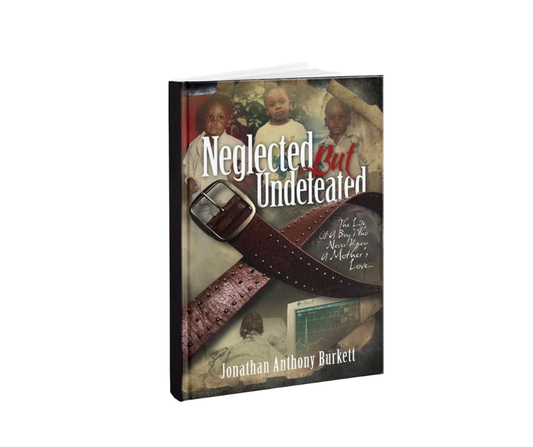
    Neglected But Undefeated by Jonathan Anthony Burkett — official book cover
    Neglected But Undefeated — Jonathan Anthony Burkett. Official cover, Upstormed.

    By Jonathan Anthony Burkett

    A reflection drawn from my autobiography, Neglected But Undefeated.

    Love with a particular face

    When I describe the reasons I kept looking toward a future in Neglected But Undefeated, my younger brothers return again and again. They are not an incidental detail added to make the story warmer. My love for them is part of its structure. During periods when my own direction felt uncertain, I could still imagine wanting something good for them. Their presence gave the future a particular face and made the consequences of my choices feel less abstract.

    The book remembers ordinary moments alongside difficult ones: playing together, being asked for help, sharing a room, and laughing over small acts of mischief. These memories matter because family life is not made only of major decisions. An everyday request can reveal how much one person trusts another. A child asking an older brother to help with a simple task may see only the task. For the older brother, that moment can also be a reminder that his presence has meaning.

    I wanted my brothers to have a childhood in which they felt loved. That wish was connected to what I knew about wanting reassurance and not always knowing where to find it. A personal history can sharpen our awareness of something another person needs. It does not automatically make us perfect at providing it. The useful question is whether that awareness changes our behavior in a way the other person can actually experience.

    The care that moved in both directions

    It is easy to tell a family story as though help always travels from older people to younger people. My account is more complicated. In the acknowledgments, I thank my brothers for helping me with food, a shower, shelter, and somewhere to rest during unstable periods. They had limited power over the circumstances, but the kindness they could offer was real. Remembering it prevents me from describing love only as something I gave to them.

    Gratitude is more accurate when it names what another person did without making the action larger or smaller than it was. A meal is a meal, and a place to rest is a place to rest. Neither should be dismissed because it did not solve everything. A person in difficulty may remember practical help with great clarity precisely because it met a need that day. The memory can remain meaningful long after the immediate problem has changed.

    At the same time, children should not be expected to carry responsibility for an older person's survival or stability. My gratitude to my brothers does not make that burden theirs. A story about what happened is different from a model of what should be required. Adults, services, and wider communities have responsibilities that affection between siblings cannot replace. It is possible to honor a child's kindness while still recognizing the limits that should protect their childhood.

    Wanting a different pattern

    Love for family can give a person a reason to interrupt a pattern they do not want to continue. In the memoir, I repeatedly consider how my actions could affect my brothers. I want to be present for them, and I want their lives to contain opportunities for happiness. Those wishes do not erase the anger and uncertainty described elsewhere in the book. They show that a person can hold conflicting feelings while still having a relationship that calls them toward greater care.

    The idea of changing a family pattern can sound enormous. In daily life, it becomes more specific. It may involve explaining a decision instead of expecting someone to guess, returning to a conversation after cooling down, or acknowledging a mistake without making the other person responsible for comforting you. These are reflections on ordinary conduct. They are not a claim that every family difficulty can be resolved through a better conversation or a little more patience.

    Some circumstances require boundaries, distance, or help beyond a household. Care should not demand that someone accept harm to prove loyalty. A dependable family relationship gives people room to have needs and limits. When I think about the kind of family life I want to help create, I think about affection that can be recognized in practical behavior. Love becomes more credible when it does not disappear the moment somebody asks an inconvenient question.

    What being there can mean

    Being there is a phrase people use easily. Its meaning becomes clearer when it describes something observable. A sibling answers a message, remembers an important date, makes time to listen, or says honestly when they cannot help. An accurate limit can be more dependable than a generous promise that never becomes an action. Relationships need room for both affection and truthful information about what each person can actually offer.

    It also matters to let family members grow beyond the roles we remember. A younger brother will not remain the same child who once asked for help. He will develop opinions, responsibilities, friendships, and a life of his own. Loving someone includes making room to learn who they are becoming. The book records a period in our history. It does not entitle me, or a reader, to assume every detail about our present lives from those memories.

    That is one reason I want to speak carefully when sharing family stories. A memory can explain what a relationship meant to me without making every relative's private life public. Gratitude does not require disclosing every detail. Sometimes a truthful account of care is enough: they helped me, I loved them, and their presence mattered. A reader can understand the significance without being invited into circumstances that do not belong to the article.

    My brothers helped keep a place in my future when I struggled to imagine it for myself. The lasting lesson I draw from that love is an obligation to pay attention to the people beside me and to the effect my choices have on them. Family can be a reason to keep building, learning, and becoming more responsible. It can also remind us that we have received care worth acknowledging, and that the next act of care can begin in an ordinary moment.

    Read Neglected But Undefeated, explore my books and more of my quotes.

    #upstormed #jonathananthonyburkett #jonathanburkett #NeglectedButUndefeated #FamilyLove

  • Before the Book, There Was a Notebook: How I Began Finding My Voice

    Neglected But Undefeated by Jonathan Anthony Burkett — official book cover
    Neglected But Undefeated — Jonathan Anthony Burkett. Official cover, Upstormed.

    By Jonathan Anthony Burkett

    A reflection drawn from my autobiography, Neglected But Undefeated.

    A place for what I could not say

    Before Neglected But Undefeated became a book, writing was a much smaller and more private act. It was a way to put feelings somewhere when speaking them felt difficult. In the memoir, I describe writing poetry, keeping thoughts on paper, and returning to a notebook during unsettled periods of my life. I was not beginning with a publishing strategy. I was trying to find words that could hold an experience long enough for me to look at it.

    A notebook did not change everything around me. It did not provide a home, resolve every relationship, or answer every question. What it offered was room to complete a thought. On a page, I could describe anger without needing someone to interrupt it, and admit longing without immediately disguising it as a joke. Sometimes the language was rough. The important beginning was that the feeling had become something I could examine, rather than something I only carried.

    That distinction remains useful to me when I think about voice. A voice is not simply a recognizable style or a polished sentence. It also involves deciding what you are willing to name accurately. What happened? What did you believe at the time? What remains uncertain? Writing becomes more trustworthy when it makes those differences visible. The page can hold an unfinished understanding without forcing the writer to pretend that every event already has a satisfying explanation.

    Learning that words could reach me

    In my autobiography, I name Maya Angelou as an important influence on my interest in poetry and writing. Reading another person's words helped me recognize that language could reach feelings that ordinary conversation sometimes passed over. I am describing the effect her work had on me, rather than claiming that our experiences were identical. A reader can feel a connection across very different lives because a writer has taken the trouble to express something carefully.

    My own early pages did not have to sound like anyone else's work to matter. Admiration can open a door without becoming an instruction to imitate. There is a difference between learning that a poem can be honest and copying the language that made another poem powerful. The first can encourage a writer to pay closer attention to their own experience. The second can prevent that attention by supplying an answer before the real question has been explored.

    I also remember a strong result on a school writing test that gave me reason to take this ability seriously. Encouragement does not always arrive as a grand prediction about somebody's future. Sometimes it is a moment in which a person recognizes that something they have been doing privately has value outside their own room. That recognition does not finish the work. It can make the next attempt feel worth making.

    From a feeling to a piece of writing

    A private page and a public article have different responsibilities. A private page can contain everything in the order it arrives. A reader needs enough structure to follow why those details matter. Turning experience into writing therefore requires another kind of attention: deciding what belongs in this particular piece, which background is necessary, and where a feeling has been expressed clearly enough that repeating it will add little.

    One practical beginning is to choose a single question. A whole childhood will not fit honestly into every article. A question about belonging, friendship, grief, or keeping a promise gives a piece a direction. The writer can then select a relevant moment and stay with its meaning. That selection should make the story clearer, rather than force the memory to support a lesson it does not actually contain. Some experiences remain complicated even after careful reflection.

    Revising also means separating what I remember from what I later learned. A childhood interpretation can be important without being the final explanation of an event. I may describe how something felt at the time and then acknowledge that I did not understand everything around me. That admission does not weaken a personal story. It lets the reader see the person who lived through it and the person who is now trying to tell it responsibly.

    An invitation rather than a formula

    I would not tell another person that they must publish their pain to become a writer. Privacy is a legitimate choice, and a notebook does not owe the world its contents. Someone may write to clarify a decision, preserve a memory, thank a relative, or explore an imagined character. Those purposes deserve respect even if the pages never become a product. The value of writing cannot be measured only by the size of its audience.

    Nor would I promise that journaling will solve a health problem. My account describes what writing meant within my life, alongside many other experiences and forms of support. It is not a substitute for help that a person may need. The more modest invitation is to consider whether a few honest sentences could make one thought easier to understand. A small beginning can be worthwhile without being advertised as a complete transformation.

    For a person unsure where to begin, an ordinary detail may be more useful than a sweeping declaration. Describe a room you remember, a journey you took often, or a conversation that left you with a question. Then ask what you knew at that moment and what you understand differently now. There is no need to make the first version impressive. Give the detail enough attention to discover whether it contains something you want to explore further.

    The distance between a notebook and a finished book includes work that a reader may never see. There are decisions about language, boundaries, sequence, and what can be left unsaid. I want the writing I share to help another person feel recognized without pretending that our lives are interchangeable. That aim began with the simple act of putting words on a page. Before there was a book, there was an effort to say something true.

    Read Neglected But Undefeated, explore my books and more of my quotes.

    #upstormed #jonathananthonyburkett #jonathanburkett #NeglectedButUndefeated #WritingLife

  • The Love Called Doctor: What My Grandfather Taught Me About Belonging

    Neglected But Undefeated by Jonathan Anthony Burkett — official book cover
    Neglected But Undefeated — Jonathan Anthony Burkett. Official cover, Upstormed.

    By Jonathan Anthony Burkett

    A reflection drawn from my autobiography, Neglected But Undefeated.

    A person who made room for me

    When I look back through the memories in Neglected But Undefeated, my grandfather is present in much more than the dramatic moments. He is there in the car, around the neighborhood, beside me at night, and in the ordinary confidence that I could call for him. We called him Doctor. To me, he was also Superman. Those names describe how I experienced his presence: someone who made a frightening or confusing world feel more manageable because I did not have to meet it alone.

    The Jamaica I remember in the book is full of movement. There are hills, familiar roads, relatives, neighbors, music, food, and people coming through the family shop. My grandfather moves through that world helping others and taking people where they need to go. I wanted to accompany him. Looking back, I can see that those journeys offered more than entertainment. They gave me the experience of being included in another person's day, rather than feeling that my presence was an interruption.

    Belonging can be difficult to describe because its strongest evidence is sometimes ordinary. A person makes room beside them. They remember that you are there. They let you speak, and they return to you after attending to something else. A child may not call those things reassurance or emotional security. The child simply begins to expect that somebody will respond. That expectation was a precious part of what my grandfather gave me, and it remains one of the clearest forms of love I can describe.

    Love that included guidance

    In the book, I remember my grandfather speaking to me about honesty, responsibility, and how to treat people. I also remember being a mischievous child who did not always accept guidance gracefully. Both memories belong in the same story. Being loved did not mean I had already become wise. It meant there was someone willing to remain involved while I was learning, someone whose concern reached beyond the immediate inconvenience of correcting me.

    That distinction matters when I think about family today. Guidance carries a different meaning when a child can recognize care within it. Advice is easier to hear when it comes from someone whose actions have already made their concern believable. This does not mean every family conversation will be easy. It means that consistency gives words somewhere to land. A child should not have to wonder whether one mistake cancels their place in the relationship.

    I do not present every detail of my childhood as a model for other households. A memoir records the life its author remembers, including the complicated parts. What I carry forward from my grandfather is the value of dependable affection and the importance of speaking honestly. Those principles can take safer, more thoughtful forms in each new generation. Loving a person from the past does not require repeating every practice from the past without consideration.

    The promise that traveled with me

    Leaving Jamaica meant leaving the people whose love had shaped my first understanding of home. My grandfather wanted me to make something of the opportunities ahead of me. In the memoir, the wish to return and help my grandparents becomes a recurring reason to keep going. Success was connected to people. I wanted to become someone who could give back to those who had already given me a place in their lives.

    That is different from chasing an achievement only because it looks impressive. A promise to someone you love gives effort a particular face. It can remind you why a difficult task matters when enthusiasm disappears. Still, a promise should help a person live, rather than become another way to punish themselves. I understand the importance of taking the next realistic step, even when the larger future remains uncertain and the original plan needs to change.

    The death of my grandfather brought a kind of grief I did not immediately understand. In the book, that confusion matters as much as the loss itself. I needed language, patience, and people willing to help me understand what had happened. When I write about him now, I want to remember the life he shared with me as well as the pain of losing him. Love deserves more space than the final moment of separation.

    What belonging can ask of us

    We cannot arrange a child's memories in advance. We can, however, consider what our repeated behavior teaches them to expect. Do we notice when they enter the room? Can they ask a question without being treated as a burden? When an adult cannot give attention immediately, do they return when they said they would? These are modest questions, but they concern the daily evidence from which a relationship becomes understandable.

    The same questions reach beyond parenting. A grandparent, older sibling, teacher, friend, or neighbor can become someone whose presence changes the meaning of a difficult day. That does not require promising to solve every problem. A more useful promise may be to listen carefully, explain what help is available, and follow through on the part that is possible. Reliability often begins where an impressive declaration gives way to a small action that actually happens.

    Remembering Doctor also reminds me to notice the people who are still here. Gratitude can become more than a feeling kept inside. It can become a conversation, a visit, an accurate thank-you, or time protected from unnecessary distraction. None of those actions guarantees that life will be fair. They do allow affection to become visible while there is still an opportunity for another person to receive it and respond.

    My grandfather's place in my story is personal, but the question his memory leaves with me is one many people can ask: who experiences my presence as a place of belonging? I cannot control every circumstance around another person's life. I can consider how I show up within it. The love I called Doctor continues to matter because it gives that question substance. It asks what I will do with the care that once helped me feel at home.

    Read Neglected But Undefeated, explore my books and more of my quotes.

    #upstormed #jonathananthonyburkett #jonathanburkett #NeglectedButUndefeated #FamilyLove