Category: life

  • Why Upstormed Puts Books, Music and Fashion Under One Roof

    By Jonathan Anthony Burkett

    Why Upstormed Puts Books, Music and Fashion Under One Roof

    Most stores pick one lane. A bookshop sells books, a music platform streams music and a fashion site sells clothes. Upstormed does all three, and that is on purpose. Here is why I chose to put my books, my music and fashion under one roof, and what it means for you when you visit.

    One Person, Several Callings

    I describe myself as an entrepreneur, author, poet and music artist. I found my voice in reading and writing and became a published author. I record inspirational hip hop and soul on my own label, Upstormed Records. And I founded Upstormed LLC and the Upstormed family of online stores, starting with upstormed.com.

    Each one is a different way to share the same message, and the store is where they meet.

    The Message That Ties It Together

    If you read my memoir, Neglected But Undefeated, you meet a boy who grew up without a mother’s love, faced hardship and serious health challenges, and refused to be defeated. If you listen to my signature song, One Life with Ambelique, you hear the reminder that you only get one life, so make it count. If you wear Upstormed merch, you carry that same spirit with you.

    The message running through all of it is simple: whatever you have been through, keep going. A book can tell that story in depth. A song can put it in your ears on a hard morning. Something you wear can remind you of it on an ordinary Tuesday. Putting them together makes the message easier to live with, not just to read about.

    What You Will Find Under the Roof

    The flagship, upstormed.com, carries more than 4,000 products. That includes:

    • Books: my memoir, the Friends 2 Lovers series and my novel Fighting To Become Champions.
    • Music: my releases on Upstormed Records.
    • Fashion: women’s and men’s clothing, jewelry and accessories.
    • Gifts and lifestyle pieces: for the people you love and for your own space.
    • Upstormed merch: the most direct way to carry the brand.

    There are also price collections such as $15 & under and $25 & under, and sister stores including Upstormed Clothing and Upstormed Store.

    The easiest way to explore is to start with whatever brought you here. If you are a reader, open a book page and then look around the gifts. If you are a listener, check out the music and then browse the merch. If you are a shopper, set your budget, find what you came for and take a moment to see the books and music on your way out. Every path leads back to the same message.

    Why This Is Better for You

    Bringing everything together is not only about my story. It also makes life easier for the people who shop and read and listen.

    Discovery goes both ways. Someone who comes for a jacket might find a book that speaks to what they are going through. Someone who comes for the memoir might find a gift for a friend. You do not need to know my work to enjoy the store, and you do not need to shop to enjoy my work.

    Gifts can carry meaning. A piece of jewelry paired with a book about resilience, or a shirt paired with a song that says keep going, turns an ordinary present into something with a message behind it.

    Your support goes further. When you buy from an independent brand that also publishes books and releases music, you are supporting all of that creative work at once.

    How Independence Shapes the Store

    I publish my own books and release my music on my own label. Building my own store follows the same thinking: you do not have to wait for someone else to give you a platform. That independence lets me keep my books, music and products connected in a way that makes sense to me, instead of scattered across places I do not control.

    It also means I care about the experience. Orders go through Shopify checkout with prices in U.S. dollars. Some items ship from overseas, so check the delivery estimate before ordering. Each store has its own refund, shipping and privacy policies, and questions go to contact@upstormed.com.

    Come In Through Any Door

    You might know me first as a writer, a voice on a track or the name on a store. However you arrived, everything is connected, and you are welcome to explore all of it. If you want to start with the stories, see my books here. If you want to see it all together, visit Upstormed Shop.

    #jonathananthonyburkett #upstormed #jonathanburkett #upstormedshop #upstormedrecords #booksandmusic #independentbrand #author #fashion

  • How to Start Over When Life Knocks You Down

    By Jonathan Anthony Burkett

    How to Start Over When Life Knocks You Down

    Sometimes life does not just slow you down. It knocks you flat: a job ends, a relationship falls apart, your health changes, or money runs out faster than you planned. Starting over can feel impossible when you are still trying to catch your breath. The good news is that you do not have to rebuild everything at once. You only have to start.

    Let yourself land before you leap

    When something big falls apart, the urge is often to fix it immediately. You apply to forty jobs in one night, or you jump straight into a new relationship, or you make a major decision just to feel in control again. Speed can feel like strength, but it often leads to choices you have to undo later.

    Give yourself a short landing period. That might be a few days or a few weeks, depending on what happened. During that time, your only jobs are to sleep, eat real food, handle what is truly urgent and let the shock settle. Landing is not quitting. It is how you make sure your next move comes from a clear head instead of panic.

    Take an honest inventory of what is still standing

    A setback has a way of making everything look ruined. It rarely is. Before you plan your comeback, sit down with a notebook and write out what you still have. Be specific and be fair to yourself.

    • People: who still picks up when you call, even if it is only one or two names.
    • Skills: what you know how to do that no one can take from you.
    • Resources: savings, a place to stay, a car, a phone, a library card, anything you can use.
    • Experience: times you have already come back from something hard.
    • Health and energy: what your body and mind can realistically handle right now.

    This list is your foundation. It turns “I have nothing” into “I have less than I wanted, but I have this.” That is a very different place to start from.

    Make the next step embarrassingly small

    Big goals are useful for direction, but they are terrible at getting you out of bed. “Rebuild my career” is too heavy to pick up on a hard morning. “Update the first section of my résumé” is not.

    Break your comeback into steps so small that you could finish one on your worst day. Call one contact. Open one bank statement. Walk around the block once. Fill out one application properly instead of ten carelessly. Each finished step is proof that you are moving, and proof matters more than motivation when you are starting over.

    “I know that I have made it through trials, so now let me see if I can make it through challenges.” — Jonathan Anthony Burkett, Neglected But Undefeated

    Rebuild your days before you rebuild your dreams

    When life gets knocked over, routines usually go with it. You stay up late, skip meals and lose track of the days. That loose structure quietly drains the energy you need for a comeback.

    Before you chase the big vision, give your days a simple shape. Pick a consistent wake-up time. Decide when you will eat, when you will work on your next step and when you will stop for the night. Add one thing that steadies you, whether that is prayer, a walk, music or a call with a friend. A steady day is not glamorous, but it is the ground every bigger plan stands on.

    Expect the comeback to have its own setbacks

    Starting over is not a straight line. You might land an interview and not get the job. You might feel strong for a week and then wake up flattened again. That does not mean you are failing. It means you are in the middle.

    When a setback hits inside your comeback, go back to your inventory and your small steps. Ask what you learned, adjust one thing and keep going. Try not to measure yourself against where you were before everything fell apart. Measure yourself against where you were last month. If you are even slightly further along, you are winning.

    If the weight starts to feel like more than you can carry alone, reach out. Talk to someone you trust, and if you are ever in crisis, you can call or text 988 to reach the Suicide & Crisis Lifeline any time.

    Your story is not over

    Being knocked down is part of a life, not the end of it. The people who rebuild are rarely the ones who never fell. They are the ones who got up slowly, took stock, made the next step small and kept taking it.

    Jonathan Anthony Burkett grew up facing economic hardship and serious health challenges, and he refused to let them define him. If you want a reminder that starting over is possible, you can read about his memoir and other work on the books page. Start where you are, with what you have, and take one step today.

    #jonathananthonyburkett #upstormed #jonathanburkett #startingover #resilience #comeback #neverquit #lifelessons #motivation #newbeginnings

  • My Grandfather “Doctor”: The Man Who Taught Me What Love Is

    By Jonathan Anthony Burkett

    My Grandfather "Doctor": The Man Who Taught Me What Love Is

    Before I knew anything about hard times, I knew my grandfather. His name was Arnold Burkett, but in our part of Westmoreland, Jamaica, everybody called him “Doctor.” He was the first person who showed me what love looks like when it is real, and when I later thought about the kind of love I hoped to find in life, his was the love I compared it to.

    Why they called him Doctor

    I was born in Miami at Jackson Memorial Hospital on February 1, 1987. As a baby I was sent to Jamaica on a cruise ship to live with my grandparents, because my mother said she was struggling in America. I grew up on a hill with my grandmother, Lynn Burkett, my great-grandmother and my grandfather.

    In my book I wrote, “I truly felt that they were my mother and father because of the love and care they gave me every day, through all the years I spent with them.” My grandfather was “a brother, best friend, father, and cousin all in one” to me.

    He got his nickname because he loved to take people places and help others. He was always on the go around Westmoreland, and I went everywhere with him.

    My superman

    As a little boy I never feared getting a beating, because all I had to do was run into my grandfather’s arms. He would save me from all troubles. “That was what really made my grandfather my superman.” I even dressed like him, with my button-down shirt tucked into my pants.

    He slept beside me at night so that no one would scare me, even though I wet the bed. When I could not sleep, I held on to his big stomach, and his breathing soothed me. My grandmother loved to joke about that stomach. She would say, “Johnny, you’re about to have another uncle.”

    I was not a perfect child. I took fruit and vegetables from the neighbors’ yards. Doctor would help me out of the trouble, and then he would talk to me about what I was doing wrong. The one thing he was truly against was smoking cigarettes.

    The talks on his lap

    One day, holding me close on his lap, Doctor gave me a talk that I wrote down in my memoir years later, as I remember it. In Jamaica I was called Johnny or Jack, so that is the name he used:

    • “When one man says I hate you, remember, Jack, I love you.”
    • “Do not run from any man or problems or else many more may come your way. So face them all, one at a time.”
    • “Just be a truthful young man with me and your family. It will take you far in life.”
    • Never put your hands on a woman in violence, and remember that every good woman deserves a good man.
    • “even if you have to put me aside, just remember to put your Father God first.”

    How his love carried me

    For my sixth birthday he threw me a big party at the crossroads on top of our hill, even though he did not have much money. A month later, in March 1993, I left Jamaica to live in Miami. Before I went, I told him, “When I come back, you better be here.” He answered, “OK, as long you respect your mother and father.”

    The years in Miami were the hardest of my life. I lived with neglect and abuse at home. My grandfather called every month and kept encouraging me to do well in school and listen to my teachers so I could get a good job. On one summer visit he asked me to go back to America, finish school, get a job and come home to take care of them. I promised. I wrote that I returned “with the determination to accomplish those goals and become successful.”

    Doctor died in November 1996. I did not even know it until I was sitting in the church at his funeral. Later I called him “my angel, my superman, my protector right here on earth.” Even after he was gone, wanting to make him proud was one of the reasons I kept going.

    The measure of real love

    After my brain surgery in 2006, I lay in the hospital thinking about the kind of love I wanted in my life. I wanted a love that was real, just like how my grandfather’s love for me “always and forever would be.”

    When I look at what he did, I see what love is made of. Love shows up: he slept beside me so I would not be afraid. Love corrects you without throwing you away: he got me out of trouble and then talked to me about it. Love tells you the truth and asks for the truth back. And love is said out loud: he told me he loved me so that no one else’s hate could have the last word.

    If you did not have a Doctor in your life, you can still become one for someone else. A child does not need you to be rich or perfect, only present, honest and loving out loud.

    If a child is in immediate danger, call 911. In the U.S., the Childhelp National Child Abuse Hotline is 1-800-422-4453.

    Carrying his name forward

    When I published Neglected But Undefeated in 2012, I named three VIPs in it: Lynn Burkett, my grandmother; Arnold Burkett, my grandfather; and Marise Christophe, my godmother. Doctor’s love is the foundation the whole story stands on.

    If you want to read more about the man who taught me what love is, and how his words carried me through, you can find my memoir on the Books page. And if someone like Doctor is still in your life, call them today and tell them what they mean to you.

    #jonathananthonyburkett #upstormed #jonathanburkett #neglectedbutundefeated #grandparents #grandfather #jamaica #westmoreland #reallove #memoir

  • Inspirational Hip Hop: Why Positive Rap Still Matters

    By Jonathan Anthony Burkett

    Inspirational Hip Hop: Why Positive Rap Still Matters

    When people argue about hip hop, they often talk as if it only has one side: flashy, aggressive or out of touch. But from the start, rap has also been a music of hope. Some of its most loved records are about surviving, growing up, respecting yourself and lifting the people around you. That tradition never went away, and it may be more needed now than ever.

    Where positive rap comes from

    Hip hop was born in neighborhoods that had been written off. Young people with very little built a whole culture out of turntables, spray paint, dance and rhymes. That act alone was hopeful. Turning hardship into art is the oldest positive message in the music.

    Early on, many artists used the microphone to describe life as it really was. Grandmaster Flash and the Furious Five’s “The Message” is widely remembered as a turning point, proving rap could be serious commentary as well as party music. Honest description of a problem is often the first step toward changing it.

    In the late 1980s, KRS-One and other rappers came together for the Stop the Violence Movement, recording “Self Destruction” to speak out against violence in their communities. Around the same time, groups in the Native Tongues circle, including De La Soul and A Tribe Called Quest, brought a playful, curious and positive spirit to rap that many listeners still treasure.

    The themes that keep returning

    You do not need to quote a single line to see the shape of this tradition. Listen across the decades and the same uplifting themes keep coming back:

    • Respect and dignity. Queen Latifah’s “U.N.I.T.Y.” pushed back against disrespect toward women and asked listeners to treat each other better.
    • Encouragement through hard times. 2Pac’s “Keep Ya Head Up” spoke directly to struggling women and single mothers, urging them to hold on.
    • Gratitude for family. Songs like 2Pac’s “Dear Mama” honored the sacrifices of parents and caregivers.
    • Faith and purpose. Kanye West’s “Jesus Walks” put spiritual struggle and belief at the center of a mainstream rap hit.
    • Self-belief and ambition. Countless records are simply about refusing to quit, chasing a goal and proving doubters wrong.

    Notice that none of these songs pretend life is easy. Positive rap at its best is not naive. It looks straight at pain and still chooses hope.

    Why it still matters

    Music shapes the voice in your head. The songs you play on the way to work, at the gym or late at night become part of how you talk to yourself. If everything on your playlist tells you that nothing matters, it gets harder to believe that your effort matters. Uplifting music does not solve your problems, but it can give you a little more fuel to face them.

    Positive rap also matters because of who is listening. Young people still look to hip hop for a picture of what success, strength and manhood or womanhood look like. When artists show that being strong can mean being kind, disciplined, faithful or honest about your struggles, that picture gets bigger and healthier.

    And it matters for the culture itself. Hip hop is big enough to hold party records, street stories, love songs and inspirational anthems all at once. Keeping the positive lane alive keeps the whole genre balanced.

    I live to inspire, not start the fire.
    — Jonathan Anthony Burkett

    The new generation of uplifting artists

    Today, positive hip hop rarely comes labeled as such. It shows up inside albums that also have club songs and love songs. Artists mix rap with soul, gospel, reggae and pop, and they talk openly about mental health, faith, healing and growth in a way that would have been rare years ago.

    Independent artists play a big part. Without needing a major label’s approval, they can release songs about whatever matters to them, including perseverance and hope. Jonathan Anthony Burkett is one of them. He describes his music as inspirational hip hop and soul: songs about change, perseverance and never giving up, released on his own label, Upstormed Records.

    His catalog follows those themes directly. One Life, featuring reggae artist Ambelique, encourages listeners to appreciate every moment and pursue their dreams. Don’t Give Up and Changes speak to pushing through and growing, I Can Only Be Me is about owning who you are, and the album Born To Make It centers on ambition and self-belief.

    Jonathan’s answer goes back to his teenage years. Tupac Shakur was his favorite artist, and a song about asking the Lord for help to change spoke to him at a time when he was close to giving up. He told his therapist that Tupac’s words inspired him “to fight for what I want out of life and to change my ways,” and he wondered why an artist with so many followers would want to be called a thug instead of a motivational leader. It is the same question this article asks.

    Build a playlist that lifts you

    If you want more positive music in your life, try a simple experiment. For one week, build a playlist of songs that encourage you, whether they are classic conscious records, gospel-tinged rap or new independent artists. Pay attention to how you feel when you press play in the morning.

    A good place to start is with songs written specifically to keep you going. Listen to Jonathan’s music on Spotify or explore every release on the Music page.

    #jonathananthonyburkett #upstormed #jonathanburkett #hiphop #positiverap #inspirationalmusic #consciousrap #upstormedrecords #motivation #nevergiveup

  • How to Shop Upstormed: Collections and Smart Shopping Tips

    By Jonathan Anthony Burkett

    How to Shop Upstormed: Collections and Smart Shopping Tips

    A store with more than 4,000 products is exciting, but it can also feel like a lot. I put this guide together so you can find what you want on Upstormed quickly, spend wisely and know exactly what to check before you click buy.

    Know Where You Are Shopping

    Upstormed is a family of online stores owned by Upstormed LLC, the company I founded. The flagship is upstormed.com, also called Upstormed Shop, and it has the widest range. Sister stores include Upstormed Clothing (upstormedclothing.shop) and Upstormed Store (upstormed.store).

    This matters for one practical reason: each store has its own refund, shipping and privacy policies. When you shop, take a second to notice which site you are on, and read that store’s policies rather than assuming they match another one.

    Start With a Collection, Not the Search Bar

    The flagship carries women’s and men’s clothing, jewelry, accessories, gifts, lifestyle pieces, Upstormed merch, and my own books and music. With that much range, browsing by collection usually gets you further than typing a vague search.

    Here is a simple way to approach it:

    1. Decide what the purchase is for. A gift, a wardrobe update, something for your home or something to read or listen to.
    2. Open the matching category. Clothing, jewelry, accessories, gifts or lifestyle pieces.
    3. Set your budget early. Use the price collections, such as $15 & under and $25 & under, if you have a limit.
    4. Shortlist a few favorites. Open each product page and read the details instead of judging by the photo alone.
    5. Check delivery and policies. Do this before you check out, not after.

    Read the Product Page Like a Pro

    Photos are only part of the story. Before you add anything to your cart, scroll through every image, read the full description and look at the material or size details where the listing gives them. Check which options you have selected, such as size or color, so you get exactly what you meant to order. If something important is missing from the listing, email the team before you buy rather than guessing.

    Shopping on a Budget

    The $15 & under and $25 & under collections are the easiest way to shop with a firm number in mind. They work especially well for small gifts, stocking stuffers, thank-you presents for a teacher or coworker, or a little treat for yourself.

    A few habits that help any budget go further:

    Make a short list before you browse so you are shopping with purpose. Compare a couple of similar items before choosing. Add the total delivery picture into your thinking, not just the item price. And give yourself permission to save something for later instead of buying everything at once.

    Planning ahead is a budget habit too, and it is the one I most want you to remember. Some items on Upstormed ship from overseas, so delivery times can vary from one product to the next. Always check the delivery estimate before ordering.

    If you are buying for a birthday, an anniversary, a holiday or any event with a fixed date, order early and give yourself a buffer. It is much better to have a gift waiting in a drawer for a week than to be watching the calendar and hoping it arrives in time.

    Timing, Checkout and Policies

    Orders go through Shopify checkout, and prices are in U.S. dollars. If you are shopping from outside the U.S., keep the currency in mind when you compare prices.

    Before you finish your order, take a minute to read the refund and shipping policies on the store you are using. They explain what to expect if something needs to be sent back or if you have a question about delivery. Knowing them up front saves stress later.

    If anything is unclear, ask. You can email contact@upstormed.com before or after you order. When you write, include your order number if you have one and a short description of your question, so the team can help you faster.

    Upstormed is a fashion and lifestyle store, but it is also where you can find my work. My memoir, Neglected But Undefeated, my Friends 2 Lovers series and my novel Fighting To Become Champions are all there, along with my music. A book can be a meaningful gift for someone going through a hard season, and it pairs well with a small item from one of the budget collections.

    Shop Smart, Shop With Purpose

    Good shopping is not about buying more. It is about buying things that fit your life, your budget and your timing. Start with a collection, set your budget, check the delivery estimate, read the policies and reach out if you need help. When you are ready to browse, you can start at Upstormed Shop. Thank you for supporting an independent brand.

    #jonathananthonyburkett #upstormed #jonathanburkett #upstormedshop #shoppingtips #giftideas #budgetshopping #onlineshopping #shopsmall

  • Blessed: Remembering the People Who Helped Me Stand Again

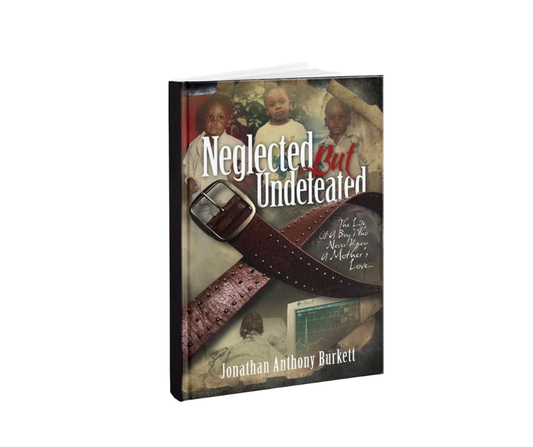
    Neglected But Undefeated — official book cover
    Neglected But Undefeated — Jonathan Anthony Burkett. Official cover, Upstormed.

    By Jonathan Anthony Burkett

    A reflection drawn from my autobiography, Neglected But Undefeated.

    A word that includes other people

    In the poem Blessed, near the end of Neglected But Undefeated, I describe gratitude for the love and guidance people brought into my life. The poem matters because it does not leave survival entirely in my own hands. There are people in the story who notice, encourage, offer help, or remain present when I am struggling to see a future. The word blessed carries that recognition, alongside the Christian faith through which I understand the journey.

    One short excerpt reads, “I am happy and thankful / For all the love and guidance / Many came into my life / Delivering unto me.” The slashes indicate the original line breaks. The language turns attention outward. It recognizes that help arrived through actual people, sometimes when I was not ready to receive it well. That is a more demanding kind of gratitude than a general statement that life eventually improved. It asks me to remember who contributed and what their contribution made possible.

    I do not read the poem as a claim that every hardship was necessary or that suffering automatically produces a reward. It records a personal response to what I had lived through and to the care I had received. A person can be thankful for help without being thankful for the circumstances that made the help necessary. Keeping that distinction clear allows gratitude to remain honest instead of turning it into an instruction to call every painful experience a gift.

    Help has ordinary forms

    In the acknowledgments of my autobiography, I thank relatives, my brothers, medical staff, friends, people who offered food or shelter, and others who encouraged me. Some contributions were practical and immediate. Others helped me imagine a different direction. Those forms of support are not interchangeable. A meal does something different from advice, and medical care does something different from companionship. Each deserves to be understood in relation to the need it actually met.

    That is one reason specific gratitude can be powerful. Saying that someone gave you a place to rest recognizes their act more clearly than describing them only as an inspiration. It also reminds a reader that care has material forms. We can speak beautifully about helping one another while overlooking the ride, appointment, phone call, or ordinary task that would make a real difference. Attention to the practical details keeps the idea of kindness connected to the circumstances of a life.

    Some people who helped me were themselves living through difficult circumstances. I do not want their kindness erased by a simple category placed around them. A person can have problems and still offer another person something valuable. The memoir includes that complexity. It is possible to appreciate a contribution without claiming that the giver had every answer or lived without mistakes. Gratitude becomes more truthful when it allows the other person to remain fully human.

    Receiving care was not always easy

    My story also describes defensiveness and times when I insisted that I did not need help. I want to keep that part in view when discussing gratitude. It is easy to imagine receiving kindness as a graceful scene in which everyone says the right thing. In life, an offer may meet pride, uncertainty, embarrassment, or an expectation of disappointment. The person offering support may not immediately see what their effort means, or whether it has made any difference.

    Recognizing that difficulty does not give a recipient permission to mistreat a helper. It does give us reason to avoid judging the value of every act by the first response it receives. Some words become meaningful later. A practical kindness may be remembered after a person has enough stability to think about it clearly. Where boundaries and circumstances allow, support can remain patient without becoming unlimited. The helper is also a person with needs and responsibilities.

    For someone learning to accept care, a useful beginning may be an accurate description of what would help. A person does not have to tell their whole history in order to ask a specific question. They can also say what they are not ready to discuss. An honest limit can make assistance clearer for everyone involved. Receiving help does not require surrendering all privacy, and offering help should not make another person's story a possession.

    How gratitude can move forward

    Gratitude can lead to a thank-you, but it can also influence how we treat somebody else. The exact act may not be repeatable. A person who received hospital care will not necessarily become a medical professional. Someone helped with housing may not have a spare room to offer. There may still be another contribution within reach: careful attention, useful information, a small practical task, or a dependable response to someone who needs one.

    It is important to keep those offers proportionate. Wanting to repay all the kindness in your life at once can lead to promises you cannot sustain. A smaller action, completed honestly, may be more useful. The purpose is not to create a flattering story about being generous. It is to notice another person's actual need and consider whether you can help without taking away their voice or making them responsible for your sense of purpose.

    The poem's title also reminds me to look at what is present before measuring what is missing. That does not mean ignoring loss, unfairness, or unfinished work. It means giving accurate attention to both. A day can contain difficulty and a meaningful act of care. A future can remain uncertain while still containing possibilities worth protecting. Gratitude is more dependable when it can acknowledge that complexity rather than requiring a cheerful account of every circumstance.

    Blessed belongs near the close of the book because it helps explain the direction I want to carry beyond its final pages. I want the help I received to remain part of how I understand my life. Remembering those people keeps the story connected to more than endurance. It connects it to relationship, responsibility, faith, and the hope that something offered to me can become care I offer wisely in another person's life.

    Read Neglected But Undefeated and explore more of my quotes.

    #upstormed #jonathananthonyburkett #jonathanburkett #NeglectedButUndefeated #Poetry

  • The Jamaican Roots of Hip Hop

    By Jonathan Anthony Burkett

    The Jamaican Roots of Hip Hop

    Hip hop is usually told as a New York story, and it is. But if you follow the music back to its first parties, you keep running into Jamaica. The sound systems, the talking over records, the love of a heavy bass line: a lot of what made early hip hop feel new had already been tested on the streets of Kingston.

    The sound system came first

    In Jamaica, from the 1950s on, the sound system was the heart of a good night out. Crews built huge stacks of speakers, loaded them onto trucks and set up in yards and dance halls. Operators competed to have the loudest rig, the deepest bass and the most exclusive records.

    That competitive spirit mattered. A sound system was not just a playlist. It was a team with a selector choosing the music, an engineer keeping the equipment alive, and a personality on the microphone hyping the crowd. Rivalries between sounds were fierce, and a crowd could crown a winner on any given night.

    If that sounds a lot like early hip hop crews battling in parks and community centers, that is not a coincidence.

    Toasting: talking over the riddim

    Jamaican deejays developed a style called toasting, where they chatted, rhymed and shouted over instrumental versions of popular songs. Producers began pressing “version” sides, instrumentals on the back of a single, which gave deejays a clean rhythm to ride. Artists such as U-Roy turned toasting into hit records in their own right around the turn of the 1970s.

    Put a rhyming voice over a looping groove and you have the basic shape of rapping. Toasting was not the only ancestor of the MC. African American traditions like the dozens, radio DJ patter, preaching and spoken-word poetry all fed in too. But the idea of a performer rocking a live crowd over someone else’s record is something Jamaica had refined years earlier.

    A Kingston-born DJ in the Bronx

    The most famous link is DJ Kool Herc, born Clive Campbell in Kingston. He moved to the Bronx as a boy and brought his memories of Jamaican sound systems with him. In August 1973 he deejayed a back-to-school party in the recreation room of 1520 Sedgwick Avenue, an event many people now point to as the birthday of hip hop.

    Herc noticed that dancers went wildest during the instrumental breaks of funk and soul records. So he used two copies of the same record to stretch those breaks out, switching between turntables to keep the drums going. That simple idea became the breakbeat, the foundation that b-boys and b-girls danced to and that MCs eventually rhymed over.

    His powerful speaker setup, his crew and his habit of talking to the crowd all carried the stamp of Jamaican sound system culture. Hip hop did not copy Jamaica. It took a Jamaican approach and pointed it at American funk, soul and the realities of the Bronx.

    Where you can still hear the island

    Once you know the connection, you start hearing it everywhere. Here are a few places Jamaica keeps showing up in rap:

    • Artists with Jamaican roots. The Notorious B.I.G. was the son of a Jamaican mother, Heavy D was born in Jamaica, and Busta Rhymes grew up with Jamaican parents. Each brought some of that heritage into their sound.
    • Patois and toasting flows. Many rappers drop into Jamaican-style cadences or patois phrases, a nod to the deejays who came before them.
    • Collaborations. Reggae and dancehall artists have featured on rap records for decades, and rappers regularly jump on dancehall riddims.
    • Remix culture. Jamaica’s habit of reworking one rhythm into many versions is a direct ancestor of the remix and the instrumental B-side.
    • Bass. The chest-rattling low end that Jamaican sounds prized became one of hip hop’s defining features.

    Why the connection still matters

    Knowing these roots changes how you listen. Hip hop was never only about one neighborhood or one community. It grew out of migration: families from the Caribbean, the American South and Latin America sharing the same blocks, swapping records and building something none of them could have made alone.

    That history is also a reminder that culture travels with people. A kid who left Kingston carried a whole musical tradition in his head, and it helped spark a movement that now reaches every corner of the world. Your background, wherever it is, is not something to leave behind. It might be exactly what you have to offer.

    The flow between Jamaica and American hip hop runs both ways, and it is still running. Jonathan Anthony Burkett is one example. He was born in Miami in 1987 and raised in Jamaica by his grandparents, and today he records inspirational hip hop and soul on his own label, Upstormed Records. His signature song, One Life, features reggae artist Ambelique, bringing those two worlds together on a single track.

    Jonathan’s earliest music memories come from that same kind of setup. For his sixth birthday in February 1993, his grandfather closed the crossroads at the top of their hill in Westmoreland to cars, set up speakers and hired a DJ. His grandfather didn’t have much money, but word spread and people came “just to show their love.” Before that night, he had already learned to dance from dancehall tapes, and he spent the party trying to match the grown-ups’ moves until his grandmother sent him to bed at 2 a.m.

    Keep listening

    The best way to understand these roots is to hear them side by side. Put on some early toasting records, then some classic old-school rap, and listen for the shared DNA: the voice riding the rhythm, the bass up front, the crowd at the center of it all. Then listen to how artists today mix the two.

    If you want to hear how one artist raised in Jamaica carries that blend forward, explore Jonathan’s releases on the Music page or follow him on Spotify.

    #jonathananthonyburkett #upstormed #jonathanburkett #hiphop #hiphophistory #jamaica #reggae #soundsystem #koolherc #musichistory

  • What Is Upstormed? A Guide to the Brand and Its Stores

    By Jonathan Anthony Burkett

    What Is Upstormed? A Guide to the Brand and Its Stores

    If you have seen the name Upstormed on a book cover, a song credit or a clothing site, you may have wondered how it all connects. I want to give you a clear, simple guide: what Upstormed is, which stores belong to it and how to get the most out of them.

    Upstormed in One Paragraph

    Upstormed LLC is the company I founded, and it owns the Upstormed family of online stores. The flagship is upstormed.com, which we call Upstormed Shop. It carries more than 4,000 products: women’s and men’s clothing, jewelry, accessories, gifts, lifestyle pieces, Upstormed merch, and my own books and music. My music is released on my label, Upstormed Records, and my books are published under the Upstormed umbrella as well.

    The Stores in the Family

    Upstormed is not just one website. Here is how the main stores fit together:

    • Upstormed Shop (upstormed.com) is the flagship and the widest selection. If you are not sure where to start, start here.
    • Upstormed Clothing (upstormedclothing.shop) is a sister store you can browse when clothing is what you are after.
    • Upstormed Store (upstormed.store) is another sister store in the family.

    Each store runs on its own, with its own refund, shipping and privacy policies. That is worth knowing before you order, because the rules on one store are not automatically the rules on another. I will come back to that below.

    What You Can Find on the Flagship

    With more than 4,000 products, upstormed.com covers a lot of ground. You will find women’s and men’s clothing, jewelry and accessories, gifts for the people in your life and lifestyle pieces for your own space. You will also find Upstormed merch, which is the most direct way to carry the brand with you.

    And you will find my work. My memoir, Neglected But Undefeated, my Friends 2 Lovers series and my novel Fighting To Become Champions are all available there, along with my music. For me, that matters. The store is not separate from the message I share in my books and songs. It is another home for it.

    If you are shopping on a budget, the store has price collections such as $15 & under and $25 & under. Those are a good place to start when you want a gift or something small for yourself without scrolling through everything.

    The flagship also works well for gifting. You can pair a piece of jewelry or an accessory with one of my books, or put together a small bundle from the budget collections for a birthday, a graduation or a simple thank-you. Thinking about the person first, and the category second, usually leads to a better gift than browsing at random.

    How Ordering Works

    I want shopping with Upstormed to be clear, so here are the basics. Orders go through Shopify checkout, and prices are in U.S. dollars. Some items ship from overseas, which means delivery times can vary from product to product. Always check the delivery estimate before you place your order, especially if you are buying for a birthday, holiday or event with a fixed date.

    Because each store has its own refund, shipping and privacy policies, read the policies on the store you are actually buying from. They are linked on each site. If anything is unclear before or after you order, you can email contact@upstormed.com with your question.

    Why I Built It This Way

    I have always worked across more than one lane. I am an entrepreneur, an author, a poet and a music artist, and the message in all of it is the same: whatever you have been through, keep going. Upstormed is the business that holds those lanes together, so a reader can discover my music, a listener can find my books and a shopper can find both.

    What that means for you is choice. You can come for a T-shirt and leave with a book, or come for a song and find a gift for someone you love. You decide how far you want to go.

    Getting Started

    If you are new to Upstormed, here is the simplest path. Visit the flagship first and browse a category that fits what you need today. Check the price collections if you have a budget in mind. Look at the delivery estimate on any item you love, read the store’s policies and reach out to contact@upstormed.com if you have questions.

    If you came here because of a book or a song, start with that and let the rest of the store be a bonus. And if you came for fashion, take a look at the books and music while you are there. You might find exactly what you need to hear.

    Thank you for supporting an independent brand. Every order helps me keep writing, recording and building. When you are ready, you can visit Upstormed Shop here, and if you want to know more about the person behind it, read my About page.

    #jonathananthonyburkett #upstormed #jonathanburkett #upstormedshop #upstormedclothing #onlineshopping #independentbrand #shopsmall

  • Not Every Question Has an Answer Yet: Reflections From My Memoir

    Neglected But Undefeated — official book cover
    Neglected But Undefeated — Jonathan Anthony Burkett. Official cover, Upstormed.

    By Jonathan Anthony Burkett

    A reflection drawn from my autobiography, Neglected But Undefeated.

    Why share an unfinished story?

    Near the end of Neglected But Undefeated, I acknowledge that there are questions in my life that remain unanswered and dreams I still want to pursue. That admission matters to the kind of story I am telling. A book can reach its final page while a life continues. Sharing the book does not mean every relationship has been resolved or that I can explain every event with certainty. It means there is a part of the journey I am ready to describe.

    The questions in this article are newly written prompts for reflection, not a transcript of an interview. The answers draw on themes and experiences recorded in my autobiography. I want that distinction to be clear because a reader deserves to know what kind of writing they are meeting. A reflective article can explore the meaning of a published story without inventing a new conversation or presenting an imagined question as something someone actually asked me.

    Does understanding the past require knowing everything?

    I do not think complete information is always available. Memories have limits, other people may remain silent, and an explanation may never arrive in the form we hoped for. The memoir itself is framed as an account of events as I remember them. That does not make the effort to understand pointless. It makes accuracy about what I know, what I believed at the time, and what remains uncertain part of the responsibility of telling the story.

    There can be a practical difference between seeking useful understanding and postponing every future decision until the past is fully explained. A person may still be able to choose what kind of conduct they want in their own life, identify support, or begin a piece of work. Those choices do not erase unanswered questions. They allow a future to develop alongside them. The next step can have value even when the whole history remains incomplete.

    What did love mean in the story?

    Love becomes recognizable through particular people and acts. My grandfather's presence, my grandmother's care, my brothers, and the help offered by others give the word substance. The book also describes longing for affection and the difficulty of expecting one relationship to fill every empty space. Those strands belong together. I can appreciate love I received while also acknowledging how strongly I wanted more and how that longing sometimes influenced my judgment.

    For a reader, the useful question may be how care becomes visible in their own relationships. It might involve time, attention, honesty, practical assistance, or a dependable response. Different people will express it differently. An impressive declaration cannot substitute indefinitely for behavior, and a quiet act should not be overlooked because it lacks dramatic language. Understanding love requires attention to what the relationship actually contains, rather than only what we hope it contains.

    Can a person change without becoming perfect?

    My closing reflections contain a commitment to a better direction, alongside an acknowledgment that I continue to make mistakes. I do not want to remove that tension in order to make the story easier to advertise. Change is more believable when it can survive an honest description. A person may have learned something important and still need practice, support, and correction. The presence of unfinished work does not make every earlier effort meaningless.

    It is useful to give responsibility a specific object. Instead of declaring an entire life a success or a failure, look at the choice in front of you. What happened? What was within your control? What could you do differently? Is there something to repair or someone to update? These questions do not guarantee that a problem will be resolved. They create a clearer place to begin than a sweeping judgment about the kind of person you will always be.

    What role does faith play?

    Christian faith is central to the memoir, but my account includes doubt, anger, prayer, gratitude, and renewed commitment. I want to preserve that movement rather than suggest that I felt certain at every moment. Faith, as I describe it in the book, becomes part of how I interpret survival and imagine a future. It is also connected to people whose encouragement helped me consider a different direction when my own view had become narrow.

    That is my personal account. Readers may have different beliefs and different ways of understanding their experiences. I do not need them to pretend otherwise in order to consider the human questions in the story. What gives you a reason to act responsibly? Who helps you remember that your future matters? What allows you to remain open to help? A conversation can recognize those questions without requiring everyone to arrive at the same language for answering them.

    What does success mean after these experiences?

    The book connects my ambitions with stability, writing, responsibility, and the wish for a loving family. Success is not only an audience or a number. It includes the conditions in which a person can work, rest, give care, and make decisions with more freedom. That does not mean public achievements are unimportant. It means I want them connected to purposes that retain their meaning after the attention surrounding an achievement has moved elsewhere.

    There is also value in noticing the people whose efforts made progress possible. A story becomes less accurate if it gives all the credit to individual determination and leaves out food, shelter, medical care, teaching, encouragement, or practical help. I can recognize my choices while thanking the people who helped make other choices available. Gratitude and agency are not competing explanations. In a real life, they can belong to the same account of moving forward.

    What can a reader carry away?

    I hope the story encourages a reader to look beyond the brief description attached to another person's name. A difficult moment, a reputation, or an outward appearance may leave out much of the life behind it. That does not remove the need for judgment or boundaries. It asks that understanding be given a fair opportunity before certainty takes over. A person can be held responsible while still being seen as more than one action or one period of their history.

    An unfinished story can therefore offer a complete invitation: pay attention, ask honestly, appreciate real help, and consider the next responsible choice. I still have questions. The memoir does not conceal that fact, and these reflections should not conceal it either. A meaningful future does not require every earlier page to become simple. It requires enough willingness to keep building a life while acknowledging what remains unresolved.

    Read Neglected But Undefeated and explore more of my quotes.

    #upstormed #jonathananthonyburkett #jonathanburkett #NeglectedButUndefeated #LifeLessons

  • How Hip Hop Was Born: The Bronx Party That Started It All

    By Jonathan Anthony Burkett

    How Hip Hop Was Born: The Bronx Party That Started It All

    Some cultural movements are hard to pin to a single moment. Hip hop is different. Its story is often traced back to one summer night in 1973, in a recreation room in a Bronx apartment building, where a young DJ played records in a way that changed music forever.

    The Bronx in the Early 1970s

    The South Bronx in the early 1970s was a place of hardship. Many neighborhoods were struggling with poverty, disinvestment and buildings that were being abandoned or burned. Young people often had few places to go and little money to spend.

    Music was changing too. Disco ruled many clubs, but it was often expensive to see and far from the neighborhood. Funk and soul records by artists such as James Brown filled block parties, and young dancers were hungry for the hardest, most rhythmic parts of those songs.

    Yet those same streets were full of creativity. Young people threw parties in parks, community rooms and apartment buildings. They danced, painted and found ways to express themselves with whatever they had. Out of that mix, something new was about to take shape.

    DJ Kool Herc and the Jamaican Connection

    Clive Campbell, who became known as DJ Kool Herc, was born in Jamaica and moved to the Bronx as a boy. In Jamaica, he had grown up around sound system culture: large, powerful speaker setups that brought music to outdoor dances, where selectors played records and deejays talked to the crowd over the music.

    Herc brought that spirit with him. He built a reputation for his loud, bass-heavy sound system and his ear for the records that made people move.

    He was also known for digging deep into his record collection, playing funk, soul and other records that were not always heard on the radio. His aim was simple: keep the dance floor full and give the crowd something they could not get anywhere else.

    August 1973 at 1520 Sedgwick Avenue

    In August 1973, Herc’s sister, Cindy Campbell, organized a back-to-school party in the recreation room of their building at 1520 Sedgwick Avenue in the West Bronx. She wanted to raise money for new school clothes, and her brother provided the music.

    That party is widely remembered as the birthplace of hip hop. The date most often cited is August 11, 1973, and the anniversary is celebrated as hip hop’s birthday. The building at 1520 Sedgwick Avenue has since become a landmark for fans from around the world.

    For Jonathan, hip hop was a lifeline before it was a career. As a teenager going through the hardest years of his life, his therapist and psychiatrist gave him a CD player so he would not dwell on the past, and he played Tupac Shakur day and night. When they asked if he would like to be a music artist, he said his goal was to write at least one hit before he died. Hip hop has always started with people who had little more than a dream and the will to be heard.

    The Breakbeat Innovation

    What made Herc’s sets special was how he used records. He noticed that dancers went wild during the “break,” the short section of a song where the vocals drop out and the drums and bass take over.

    Using two copies of the same record on two turntables, Herc played the break on one, then switched to the same spot on the other, extending a few seconds of rhythm into a long groove. This approach, often called the “merry-go-round,” gave dancers more time to show off their moves. Those dancers became known as break-boys and break-girls, or b-boys and b-girls.

    Herc and his friend Coke La Rock also talked to the crowd over the music, shouting out names and keeping the energy high. That role grew into the MC, the foundation of rapping.

    It was not complicated technology. It was two turntables, a mixer, powerful speakers and a sharp understanding of what made people dance. That simplicity is part of why the idea spread so quickly. Other young DJs could see what Herc was doing and start experimenting themselves.

    From One Party to a Culture

    Hip hop quickly grew beyond one DJ. Other Bronx pioneers built on what Herc started:

    • Afrika Bambaataa formed the Universal Zulu Nation and promoted hip hop as a positive alternative to gang life.
    • Grandmaster Flash refined DJ techniques, making mixing between records tighter and more precise.
    • Crews of MCs, b-boys, b-girls and graffiti writers spread the culture from block parties to clubs and across the city.

    Hip hop came to be described through four core elements: DJing, MCing, breaking and graffiti. In 1979, “Rapper’s Delight” by the Sugarhill Gang became one of the first rap records to reach a wide audience, carrying the sound far beyond New York. In 2023, people around the world celebrated hip hop’s 50th anniversary.

    Why the Story Still Matters

    The birth of hip hop is a reminder that great things can come from hard places. A teenager with a sound system, a sister with a plan and a room full of young people helped launch a culture that now shapes music, fashion, language and art around the globe.

    It is also a story about the bond between the Caribbean and the United States. A Jamaican-born DJ drew on sound system traditions to create something new in New York. Jonathan Anthony Burkett, born in Miami and raised in Jamaica, carries his own version of that connection in his inspirational hip hop and soul.

    Keep the Music Going

    Hip hop began as people making something out of very little and refusing to stay silent. That spirit is still alive in independent artists today. To hear Jonathan’s take on hip hop with a message of perseverance, visit his music page or find him on Spotify.

    #jonathananthonyburkett #upstormed #jonathanburkett #hiphop #hiphophistory #djkoolherc #bronx #1520sedgwick #breakbeat #upstormedrecords #rap