
Tag: Togetherness

  • When the Storm Hits, Hold Hands: We Rise Faster Together

    By Jonathan Anthony Burkett

    “When the storm hits, hold hands. You rise faster together than apart.”

    — Jonathan Anthony Burkett

    When trouble comes, our first instinct is often to pull inward. We go quiet, we stop answering calls, we tell ourselves we will handle it alone and talk about it later. Sometimes that feels like strength. But this quote asks us to do the opposite. When the storm hits, reach out. Grab a hand. Let someone grab yours. The way up is shorter when you are not climbing it by yourself.

    Why storms push us apart

    Hard seasons have a way of isolating people. A family facing money trouble can start blaming each other. A couple dealing with grief can each retreat into their own sadness. Friends going through the same loss can drift because nobody knows what to say. Pressure makes us protective, and protection can turn into distance before we notice.

    That is exactly why holding hands has to be a choice. It rarely happens by accident when things are hard. Somebody has to say, “We are in this together,” and then act like it.

    What holding hands looks like in real life

    Holding hands is a picture, but it points to everyday actions:

    • Talking it through instead of keeping score. In a storm, the question is not whose fault it is. The question is what we do next, and who does which part.
    • Sharing the load. One person handles the phone calls, another handles the meals. One person sits with the worry tonight, the other takes tomorrow. Nobody has to carry all of it.
    • Praying together. There is something steadying about hearing someone you love bring your name to God. It reminds you that you are seen, and that you are not the only one hoping.
    • Checking in often. A short message, a knock on the door, a “how are you really doing?” These small touches keep people from slipping away into silence.

    Why together is faster

    It might seem like going it alone would be quicker. No discussions, no waiting on anyone else, no compromises. But storms are not only about speed. They are about endurance. When you are alone, every setback lands on one set of shoulders. When you are together, one person’s strong day can carry another person’s weak one. You lose less time to despair, because someone is there to remind you why you are still fighting.

    Scripture puts it plainly:

    “Two are better than one; because they have a good reward for their labour. For if they fall, the one will lift up his fellow: but woe to him that is alone when he falleth; for he hath not another to help him up.” — Ecclesiastes 4:9-10 (KJV)

    Falling is part of life. The difference is whether there is a hand nearby when it happens. A person who falls alone has to find their own way up. A person who falls beside a friend, a spouse, a brother or a sister is already halfway back on their feet.

    For families, couples and friends

    This applies in every kind of relationship. For families, it might mean gathering everyone at the table to face a hard decision together instead of protecting the kids from every detail. For couples, it might mean turning toward each other when grief or stress makes you want to turn away. For friends, it might mean showing up uninvited with groceries because you know they will not ask.

    And it applies to how we let others help us. Holding hands takes two. If you are always the strong one, the storm may be your chance to let someone else be strong for you. That is not weakness. That is trust.

    Rising together

    Storms end. The sky clears eventually. When it does, you will look around to see who is standing next to you. The people whose hands you held in the rain will be the people you share the sunshine with. That bond is one of the hidden gifts of hard times. It is forged in the storm, and it lasts long after.

    So the next time the wind picks up, do not let go. Reach for the people God placed beside you. You will rise faster, and you will rise together.

    For more on this theme, read Lean on God, Lift Each Other, and Watch the Whole Family Rise and Two Friends Praying Together Can Carry What One Heart Can’t Hold Alone.

    Follow Jonathan on Instagram and Facebook.

    Whose hand are you holding through your current storm, and who might need yours?
  • An Invitation Becomes More Welcoming When People Can Help Shape It

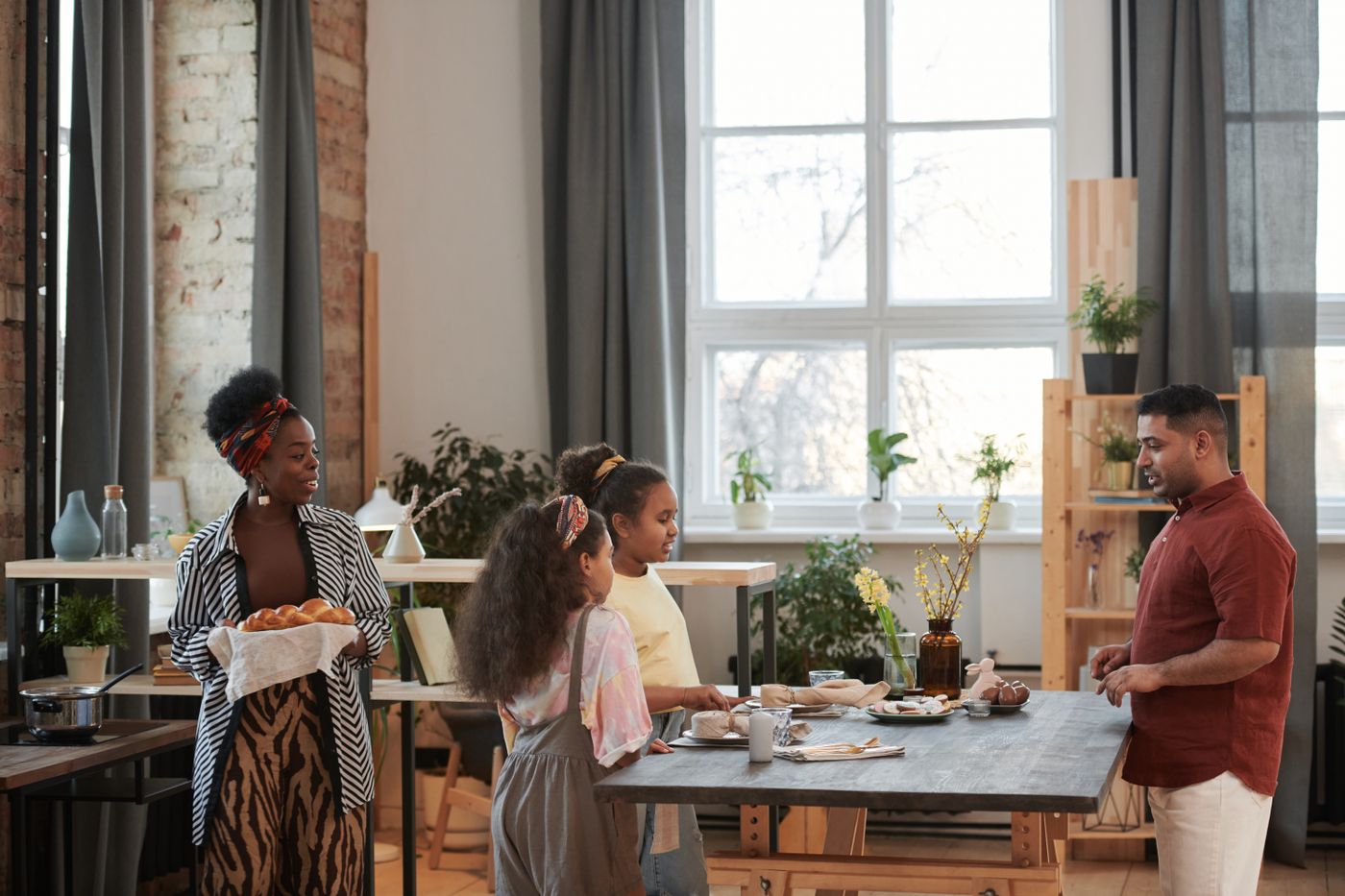
    People gathered around a table in a home
    Illustrative stock photograph; these models are not Jonathan or his family. Andy Barbour / Pexels. License.

    By Jonathan Anthony Burkett

    Original reflections | October 19, 2026

    A family invitation can be affectionate and still be difficult to accept. The host may imagine a relaxed afternoon while a guest is trying to work out transport, an early shift the following morning or whether a child will have somewhere to sit comfortably. None of these details automatically means that the invitation is unwelcome. They mean that joining other people happens inside a real life. A warmer invitation makes room for those practical realities before treating attendance as proof of love.

    I want to think about hospitality as a conversation that begins before anybody arrives. The person organizing a gathering does not have to anticipate every possible need alone. Guests should also have a way to explain what would help. When the plan has a little room to change, more people can take part in shaping an occasion they are being asked to enjoy. That shared role can be modest, specific and entirely ordinary.

    Explain what the invitation actually involves

    An invitation becomes easier to consider when it includes a clear beginning, a likely ending and an honest description of what is planned. A meal is different from an afternoon of helping with a household project. A short visit is different from an open-ended celebration. Giving those details does not remove spontaneity. It lets people decide what they can reasonably offer without having to guess at the expectations hidden behind a friendly message.

    It can also help to distinguish what is fixed from what is flexible. Perhaps the date cannot change, but the meal can be served earlier. Perhaps the room is small, but a quieter visit on another day is possible. Naming that flexibility gives guests something concrete to respond to. Otherwise, a person may decline an entire invitation because one part of it seems impossible, even though a small change could have made participation comfortable.

    The same clarity is useful when asking for help. If you want someone to bring food, say what would be helpful and whether it is optional. If you hope people will assist with setting up, ask rather than assuming that the earliest arrival has volunteered. Warmth is easier to sustain when people understand what they are agreeing to do. Surprises can be delightful; unexpected duties are a different kind of surprise.

    Ask a question that has a usable answer

    A broad offer to accommodate everybody can sound generous while leaving guests uncertain about what to say. A more practical question might ask whether the proposed time works, whether the food needs discussing or whether there is something about the space that would make the visit easier. These are invitations to share relevant information. They do not require someone to explain their entire personal situation in order to request a small adjustment.

    Privacy matters here. A guest may be willing to discuss a need with the host but not with a family group chat. Leave a private route for that conversation. If an arrangement changes, explain the change without announcing another person’s circumstances. Hospitality does not become more thoughtful by turning someone’s request into a public account of why they are different. The aim is to make participation possible with dignity.

    Be honest about limits as well. A host may not be able to change a room or provide every kind of food. That can be said respectfully. The conversation can then explore another time, a shorter visit or a contribution the guest is comfortable making. A clear limit is more useful than an enthusiastic promise that will not be kept. People can work with accurate information more easily than with reassurance that disappears on the day.

    Leave people a way to participate partly

    Attendance does not always have to mean staying for the whole occasion. Someone might join for the meal and leave before evening, or visit briefly between responsibilities. If that works for the gathering, make it clear that a shorter visit is welcome. It gives people an option between full participation and complete absence. The time they can offer can then be appreciated for what it is rather than measured against an imagined perfect visit.

    A person who cannot attend may still want a small connection. Ask before arranging a video call or putting a phone in front of the whole room. A surprise call can arrive at an awkward moment, and a brief private message may be more welcome. Participation should remain an invitation at each stage. Being missed can feel affectionate without becoming a demand to demonstrate availability on another device.

    Children also benefit from knowing what an occasion will involve in ordinary terms. Tell them where they are going, who they may see and what is expected of them. Avoid promising that every moment will be exciting. A simple description leaves space for enjoyment without requiring a child to perform enthusiasm. Adults can remember that a young guest is learning how to join a gathering, not auditioning for approval from everyone present.

    Notice the people doing the invisible work

    Once the gathering begins, hospitality is shared through small decisions. Someone can make room at a table, explain where things are kept or offer a useful task instead of waiting to be directed repeatedly. A guest can ask what help is actually needed before reorganizing the host’s plans. A host can accept a practical contribution without surrendering the entire occasion. Cooperation often becomes easier when the request is specific and the response is freely given.

    Afterward, a short conversation about what worked may be enough. Was the timing comfortable? Did one person carry too much of the preparation? Is there something worth doing differently next time? These questions need not turn a family meal into an administrative exercise. They allow care to continue beyond the moment when the last guest leaves. The next invitation can benefit from what the people involved have learned together.

    A welcoming occasion does not have to look impressive in a photograph. It needs to make sense for the people invited into it. There is room for simple food, an ordinary room and a plan that changes a little after someone asks a useful question. Family closeness can be expressed through that willingness to make space. The invitation says that you are wanted; the conversation helps make it possible for you to be there.

    #upstormed #jonathananthonyburkett #jonathanburkett #FamilyLife #Togetherness