
Tag: LearningTogether

  • An Old Family Game Can Welcome Someone Who Is Learning

    Jonathan Anthony Burkett — author portrait
    Jonathan Anthony Burkett. Author-supplied portrait.

    By Jonathan Anthony Burkett

    Original reflections | November 13, 2026

    An old game can feel easy to the people who have played it for years. The turn order is familiar, the shorthand makes sense, and someone already knows which piece belongs to whom. A newcomer enters a different experience. They may still be learning what counts as a turn while everyone else is thinking several moves ahead. A welcoming family game makes room for that difference instead of treating familiarity as evidence of natural ability.

    This new reflection uses a hypothetical gathering, not a remembered event involving my relatives. It offers ordinary prompts for shared play and learning. My official book page provides a route to more of my writing about life and relationships. The example here is deliberately simple: several people know a tabletop game, one person is learning, and everyone wants the time together to be enjoyable.

    The first useful decision may happen before the pieces move. The group can ask whether the newcomer would prefer a brief explanation, a demonstration or a practice turn. People do not all want the same introduction. One person may enjoy learning through action; another may want to see a complete turn first. Offering a choice avoids making the group’s usual teaching style another rule the newcomer must discover without help.

    Explain the version this group is playing

    A familiar game may have a printed rulebook and several family variations. Those variations can be part of the pleasure, but they need to be named when someone new joins. A newcomer cannot follow a rule that exists only in other people’s memories. Saying which version is being used makes the activity more understandable without requiring the group to abandon every custom that gives the game its local character.

    In the hypothetical gathering, one player might announce that a certain move is allowed because it has always been allowed here. The useful next step is to explain that rule before it affects the newcomer’s result. The group can also decide whether a disputed variation should wait until the next game. A clear agreement keeps the discussion attached to the activity rather than turning it into a test of who belongs to the family’s history.

    A demonstration should leave the learner a chance to make a choice. An experienced player can show how a turn works without choosing every move the newcomer makes afterwards. Help that continues through every decision may produce a technically successful turn while removing the very experience the person came to share. A practice round can be useful precisely because it allows an ordinary mistake to become information rather than an embarrassing public interruption.

    Let questions fit into the rhythm of play

    A learner may need to ask the same question more than once. That can happen because a rule looks different when it finally applies to a real position on the table. The group can make a small opening for the question and answer the specific point at hand. Repeating the entire explanation impatiently may add more information while making the original uncertainty harder to locate.

    One possible arrangement is to identify a player who is willing to explain rules during the first round. That is a suggestion for this invented setting, not a requirement for every game. The value is that the newcomer knows whom to ask and the other players know why a pause is happening. If the arrangement stops being useful, it can be changed. Courtesy does not require keeping a teaching plan that nobody is enjoying.

    The learner should also be free to say that they would rather watch the next round. Watching can be participation when it is chosen. It becomes less welcoming when the group assumes that someone who sits out has failed or spoiled the occasion. A person may enjoy company without wanting to learn a complicated activity that evening. The gathering can hold that preference alongside the enthusiasm of people who want to continue playing.

    Keep humor attached to a shared pleasure

    Games can produce funny moments, including mistakes. A useful question is whether the person involved is enjoying the joke too. Familiarity among experienced players does not automatically tell them how a newcomer hears a nickname or repeated reference to an error. If a joke has stopped being enjoyable for someone, the group can let it end without demanding that the person defend their sense of humor.

    In the imagined game, an incorrect move might be mentioned once with laughter and then left behind. Bringing it back at every turn can change its place in the gathering. It may begin to define the learner’s role even after they have understood the rule. A group can notice that shift and direct its attention toward the next decision. A newcomer deserves opportunities to contribute more than the mistake that made everyone laugh first.

    Winning also need not carry the entire meaning of the evening. The group can play seriously while recognizing other parts of the experience: a clear explanation, an unexpected tactic, a good question or a patient pause. Those observations should be honest and specific. Empty praise can feel as dismissive as criticism if it suggests that a learner’s actual decisions were too unimportant to notice.

    A useful ending might include a simple invitation to play again, with room for an honest answer. If the newcomer enjoyed one part and found another confusing, that information can help shape a future gathering. The response does not have to become a verdict on the family’s favorite game. People can like one another and prefer different ways of spending time, or enjoy the same activity at different levels of intensity.

    An old game becomes more welcoming when its familiar players remember that knowledge has a history. They learned its rhythms too, even if the learning now feels distant. Explaining the local version, making questions possible and leaving choices with the newcomer can let an established tradition include a new participant. The goal is an evening people can understand and help shape, with enough room for both skill and the pleasure of learning together.

    #upstormed #jonathananthonyburkett #jonathanburkett #FamilyPlay #LearningTogether
  • Teach a Family Task Without Taking the Task Back

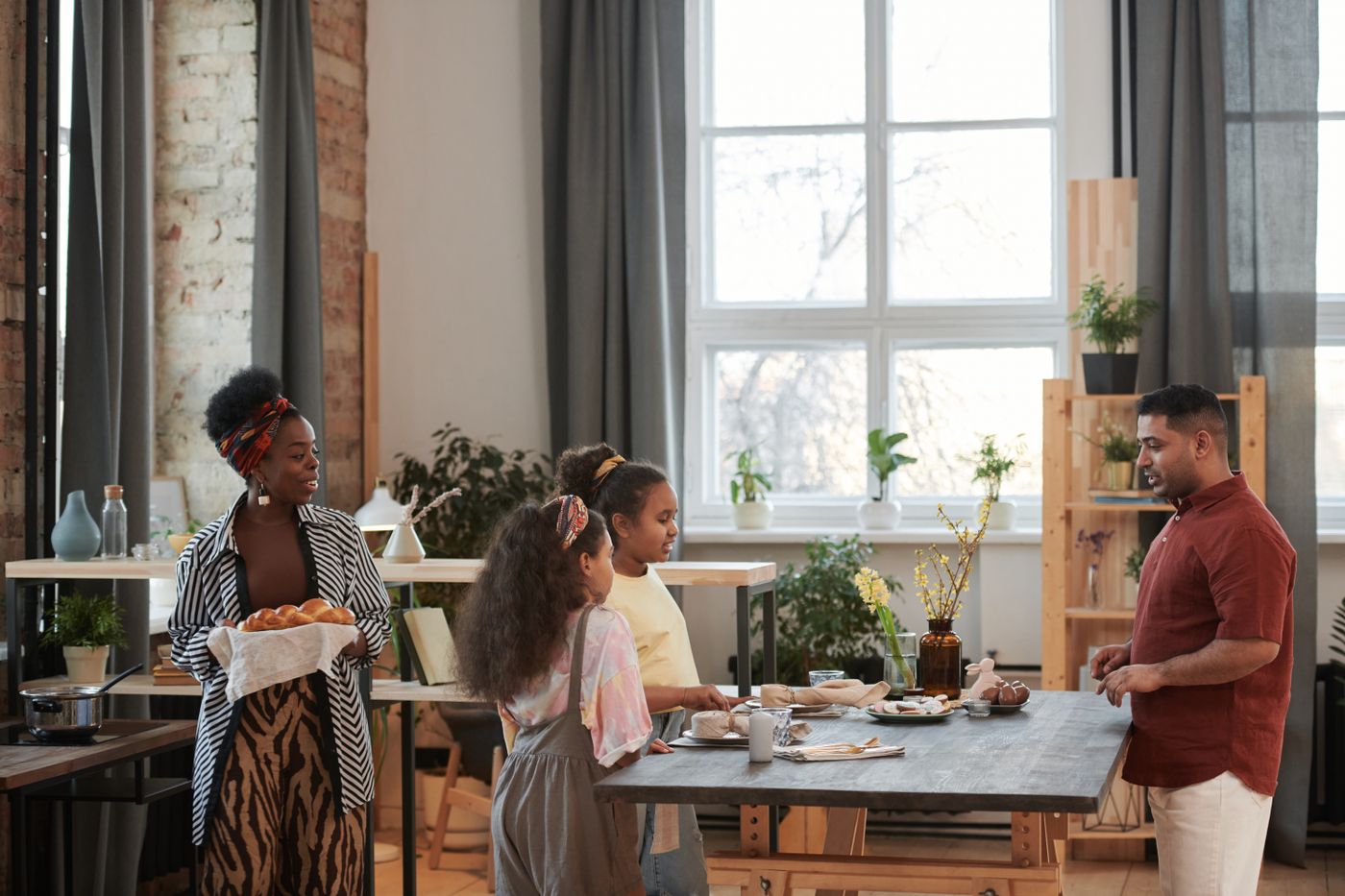
    A family standing beside a dining table
    Illustrative stock photograph of models, not Jonathan or his family. Andy Barbour / Pexels. Source · License.

    By Jonathan Anthony Burkett

    Original reflections | October 29, 2026

    Someone offers to learn a household task. You begin explaining, notice a slower movement or an unfamiliar method, and reach in to finish it yourself. The job gets done, but the opportunity to learn disappears. Next time, you may wonder why the responsibility still belongs to you. Sharing a task requires more than inviting another person to stand nearby. It requires making the useful knowledge available and allowing the learner to perform enough of the work for that knowledge to become their own.

    This is an original reflection on ordinary, low-risk family tasks, such as sorting a shared cupboard or preparing a table. It is not instruction for dangerous equipment, medical care or any activity that requires qualified training. The examples are hypothetical and do not describe my present household. Within that everyday scope, teaching can be an act of trust. It gives another person a fuller place in a shared routine instead of preserving an arrangement in which one person always knows and everyone else must keep asking.

    Choose a time when learning can happen

    A rushed moment is not always a fair classroom. If guests are arriving in five minutes, you may reasonably need to finish preparing the room. That does not establish that the other person cannot learn the task. It establishes that this particular moment has a tight deadline. Choose another occasion and follow through. Otherwise, the repeated emergency becomes a permanent explanation for why knowledge never changes hands. A calm twenty minutes can be more useful than several tense demonstrations squeezed into the busiest part of a day.

    Begin by explaining the result that matters. If you are sorting a cupboard, the aim may be that everyone can find the daily items and that fragile pieces are stored appropriately. Your exact arrangement may be one way to achieve that result. Distinguish the necessary conditions from the habits you happen to prefer. This makes the lesson more understandable and gives the learner a basis for judgment. They can adapt when a shelf changes instead of trying to memorize a pattern whose purpose was never made clear.

    Ask what the person already knows. A family member may have relevant experience from another home, a workplace or a different task. Being new to your routine does not make them new to all practical reasoning. Let them explain their understanding before delivering a complete lesson from the beginning. You may discover that only one detail needs clarification. Respecting that starting point can keep teaching from feeling like a performance of superiority and turn it into an exchange between people who each bring something useful.

    Demonstrate the hidden decisions

    People who know a task well often omit the part a newcomer most needs. They say to put something in its usual place, although only they know which place is usual. They choose a particular container without explaining why its size matters. Slow down enough to name those decisions. You do not need to narrate every movement. Focus on the information that would let another person complete the work when you are absent. A task has not fully been shared if its essential instructions still depend on your presence.

    Show one manageable part, then let the learner try it. Watching and doing are different experiences. The moment someone begins may reveal a question neither of you thought to ask during the demonstration. Allow that question to improve the explanation. If they pause, ask whether they want a hint, another example or time to think. Instantly supplying the next action can make the task appear to move smoothly while preventing them from deciding anything. Learning sometimes looks slower than a finished routine because it includes the work of understanding.

    When the method differs from yours, return to the agreed result. Is something important being missed, or is the difference merely unfamiliar? If the result is sound, there may be room for another approach. Shared responsibility can require tolerating a cupboard arranged slightly differently from the one in your imagination. This does not mean pretending that every method is equally useful. It means giving a reason for a correction and remaining open to a reason for the alternative, rather than treating personal habit as the whole standard.

    Agree on the next attempt

    One successful lesson does not automatically define a permanent responsibility. Ask whether the person is willing and able to take the task on, how often it is needed and what support remains useful. A child, an adult relative and a visiting guest have different roles. Avoid turning a moment of curiosity into an unexpected lifelong assignment. If the task is becoming part of a shared routine, make that decision explicit. Ownership is easier to understand when the agreement includes the recurring work, not just the first demonstration.

    Make essential instructions easy to revisit. A short note about where supplies belong may be enough. Write it together if that helps identify unclear language. The record should serve the person doing the task, rather than become a list of reasons you can later say they did it wrong. Ask which details they would want to look up again. Their answer may differ from the information you assumed was difficult. A practical reminder is most useful when it addresses an actual point of uncertainty.

    After the next attempt, talk about what worked and what remained awkward. Keep feedback specific to the task. A missed item can be corrected without assigning a family identity such as careless or hopeless. Those labels can outlive the small event that produced them. Likewise, give credit for the real effort and understanding you observed. If the routine needs changing, adjust it together. Teaching succeeds partly when the learner can recognize a problem and propose a workable revision instead of waiting for your verdict on every detail.

    The larger change is in the relationship to the work. A familiar task can stop being private knowledge that one person guards, resents and repeatedly performs alone. Another person gains room to contribute with understanding. That change takes patience from the experienced person and attention from the learner. It may begin with a modest decision to keep your hands back for another moment, explain the reason behind a step and let someone finish. The task can then become shared in practice, rather than shared only in the invitation to help.

    #upstormed #jonathananthonyburkett #jonathanburkett #FamilyLife #LearningTogether