
Category: Family

  • When Family Memories Differ, Keep the Difference in the Story

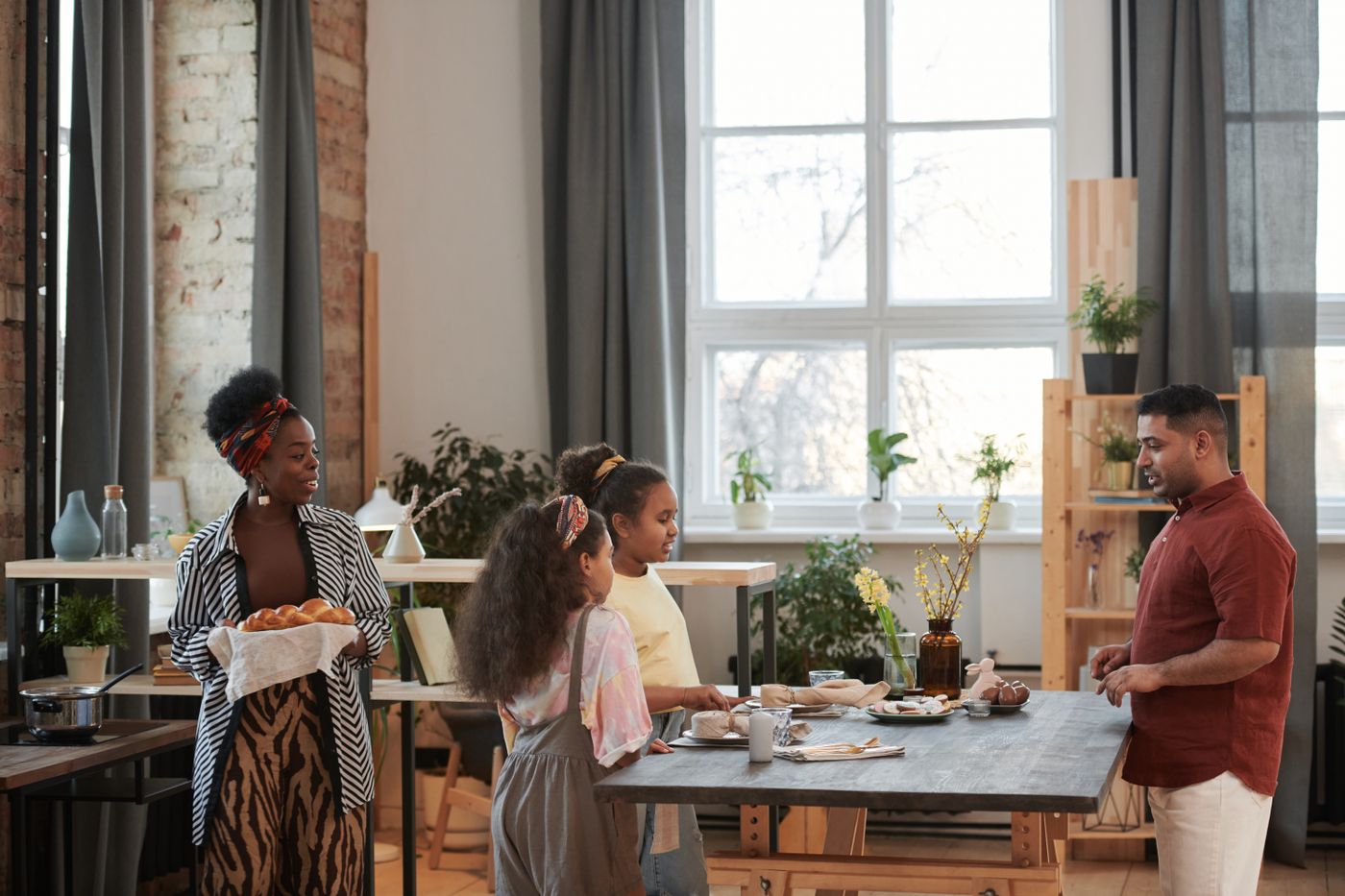
    Family members standing near a table indoors
    Illustrative stock photograph. The models are not Jonathan’s family. Andy Barbour / Pexels. Source · License.

    By Jonathan Anthony Burkett

    Original reflections | October 24, 2026

    One relative remembers a long journey. Another remembers arriving quickly. Someone is certain the meal happened on a Sunday; someone else places it during a holiday. A family story can become an argument before anyone has finished telling the part they wanted to share. There may be a fact worth checking, but there may also be several experiences worth preserving. Recording the difference can be more honest than forcing every person into a single polished version. A shared history does not have to sound as though one person witnessed it for everyone.

    This article offers a new reflection on ordinary family storytelling. It does not describe an event in my own family or make clinical claims about memory. It also does not suggest that a serious account of harm should be dismissed as merely another version of a pleasant occasion. The examples concern everyday recollections and the practical choices involved in saving them: what to ask, what to verify and how to represent disagreement without inventing certainty or turning a family conversation into a contest.

    Begin by asking whose recollection you are hearing

    A useful account can identify its speaker. Rather than writing that everyone was delighted, say who remembers feeling delighted and what they recall enjoying. The change may seem small, but it stops one person’s emotional response from becoming a statement about the whole group. Someone who was busy preparing the occasion may remember work where a guest remembers leisure. Both details can belong in the story without requiring either person to pretend the day had only one meaning.

    Let the speaker finish before inviting corrections. Interruptions can shift the purpose from remembering toward defending. You can note a question and return to it after the account is complete. Ask what the person saw, heard or did, rather than requesting an immediate explanation of what everyone else must have thought. A remembered action and a later interpretation are different kinds of material. Both may be interesting, but keeping them distinguishable gives the reader or listener a clearer sense of what is actually being offered.

    Give checkable details a different place from personal impressions

    A photograph, dated letter or calendar entry may help establish when an event happened. If you use one, record what it supports rather than asking it to settle every part of the story. A date written on a photograph does not prove how everyone felt that afternoon. A smiling face does not explain what happened before or afterward. Evidence becomes more useful when its limits are clear. It can correct a specific detail while leaving the rest of the recollection open to the person who lived it.

    Sometimes no surviving record settles a difference. In that case, uncertainty can remain visible. One person places the visit in one year and another remembers it differently is a complete and honest sentence. There is no need to choose the account delivered with the most confidence simply because a family album looks neater without a question mark. If a later discovery clarifies the date, you can add it with a note. Until then, a transparent gap is preferable to a detail supplied only to make the story flow.

    Preserve the words without turning every pause into a performance

    If you record a conversation, explain what you intend to do with the recording and ask before sharing it beyond the agreed audience. A person may welcome having a story saved privately while preferring not to appear in a public video. Those choices do not contradict each other. When preparing a transcript or caption, avoid adding a dramatic motive to an ordinary hesitation. A pause may simply be a pause. The story does not need invented tension to deserve attention.

    Editing also changes the shape of an account. Removing repetitions can improve readability, but cutting away a qualification may make the speaker sound more certain than they were. If the person said they thought something happened, preserve that uncertainty. Where practical, let them review the edited version before it is distributed. The purpose is to represent their recollection fairly, not to produce the most impressive performance of their voice. A family archive can be clear without pretending the original conversation arrived fully organized.

    Do not require a relative to be the family’s permanent narrator

    Some people enjoy telling familiar stories. Others may be tired of being asked for the same account or may want to talk about a different part of their lives. An invitation should include that freedom. Knowing a story well does not create an obligation to retell it at every gathering. Ask whether the person wants to speak and whether there is something else they would prefer to remember. A collection becomes richer when it includes the subjects people choose, not only the ones listeners have come to expect.

    Younger family members can contribute questions without being assigned the job of resolving every disagreement. Let them notice differences and ask for clarification. They do not have to decide which adult wins. The conversation can model a less combative approach: identify the source, check what can be checked and leave room for distinct perspectives. If the exchange becomes uncomfortable, it can stop. Preserving history is a worthwhile purpose, but it does not require finishing a recording at the expense of the people in the room.

    A version can have a name and a date

    A simple label may do more good than a lengthy introduction. Note who told the story, when it was recorded and whether it was edited. If another person contributes a different recollection later, keep it alongside the first rather than silently replacing it. A reader can then understand that the collection grew through several conversations. This is especially useful when the story will pass to people who were not present and cannot rely on the family’s informal knowledge of who remembers which part.

    A family history can remain warm while admitting that its details do not all line up. Affection does not require uniform recollection, and disagreement does not make the effort to remember pointless. Save the speaker’s perspective, distinguish evidence from impression and give uncertainty an honest place. The resulting story may be less tidy than the version told most loudly. It may also be more welcoming, because another relative can recognize their experience within it without first having to erase someone else’s.

    #upstormed #jonathananthonyburkett #jonathanburkett #FamilyStories #FamilyLife

  • Before Posting a Child’s Photograph, Invite an Answer You Will Respect

    Family members standing near a table indoors
    Illustrative stock models, not Jonathan or his family. Andy Barbour / Pexels. Source · License.

    By Jonathan Anthony Burkett

    Original reflections | October 23, 2026

    A family photograph can feel like an obvious thing to share. The adults remember the occasion fondly, the picture looks cheerful and relatives would enjoy seeing it. Yet the child in the image may experience the choice differently. They may dislike that particular expression, want the moment kept within a smaller circle or simply not want a photograph posted that day. An ordinary family decision can make room for that preference without becoming a confrontation. The useful question is whether the invitation to answer includes a real possibility that the adult will change the plan.

    This is a new reflection about considerate family sharing, not a description of my own household and not a legal guide to children’s privacy. Adults remain responsible for decisions about a child’s welfare. Asking for a preference does not transfer that responsibility to the child or make every proposed post appropriate. It can, however, establish a small habit of respect: the person pictured has a perspective worth hearing, even when the person holding the phone sees nothing embarrassing in the image.

    Show the actual choice

    A general question about whether someone likes photographs may be too broad to help with a particular post. Show the image you are considering and explain, in language the child can understand, where you intend to share it and who you expect to see it. Distinguish taking a photograph from distributing it. Someone may enjoy looking at a family picture privately while feeling differently about putting it on a public page. Treat those as separate decisions rather than assuming that smiling for the camera settled everything that comes afterward.

    Avoid making the question sound like a test of affection. A child should not have to demonstrate love for a grandparent by agreeing to a post. Nor should their hesitation become evidence that they are ungrateful for the occasion being celebrated. The photograph and the relationship are different things. If the purpose is to let a relative know that an event went well, a message without an image may serve that purpose. There is often more than one way to include someone in family news.

    Make refusal ordinary enough to use

    An invitation is difficult to trust if a negative answer is followed by repeated persuasion. Asking again in a more disappointed voice does not make the second answer freer. When a child expresses discomfort, pause the posting plan and consider an alternative. You might choose a different image together, share a picture of the finished activity without showing a face or keep the moment offline. The point is not to find the fastest route around the original answer. It is to show that the answer affected the decision.

    Adults can model this without turning the exchange into a public lesson. There is no need to announce that a child refused or to make their preference the subject of a caption. A quiet adjustment may communicate more respect than a performance of how respectful the adult has been. If other relatives ask why a particular photograph was not shared, a simple statement that the family chose another option can be enough. Personal preferences do not need to become entertainment for the group.

    A caption is another part of the picture

    An image may be welcome while the story attached to it is not. Before writing a caption, separate what happened from the private interpretation you are tempted to add. A photograph of a child completing an activity does not establish their future career, emotional state or opinion of everyone present. Let the description remain close to what you actually know. If the child is old enough to contribute, ask what they would like the moment to be called rather than supplying an identity they did not choose.

    Be especially thoughtful about turning a mistake into a funny family story. The adult may expect the child to laugh along because the event seems harmless from an adult perspective. The child may still feel exposed. Humor does not require a person to surrender the right to dislike being its subject. A useful pause asks whether the joke depends on another person’s discomfort and whether the same warmth could be expressed through a detail that does not place them in that position.

    Shared albums need shared expectations

    Private distribution also benefits from a clear agreement. When sending a photograph to a small group, say whether you want recipients to ask before passing it along. Do not promise a child that an image can never travel further than intended; explain the choice honestly and keep the audience proportionate. An agreement about sharing is useful only when the people receiving the image understand it. If a relative repeatedly ignores the arrangement, reconsider what you send rather than asking the child to accept the resulting discomfort as inevitable.

    Families may differ about how much they share, and those differences can be discussed without treating one person as unreasonable. An adult who enjoys frequent updates may see inclusion where another adult sees overexposure. Bring the discussion back to the actual purpose, audience and person pictured. A smaller, clearer agreement is often more workable than an argument about whether sharing photographs is always good or always bad. The decision concerns this image and this context, not every possible family habit.

    Let preferences change

    A photograph someone welcomed earlier may feel different later. If a child asks about an older post, listen before defending the original decision. Discuss what can practically be changed on the account you control, while being honest about what you cannot guarantee elsewhere. A willingness to reconsider is part of respect. It shows that a person’s past agreement is not a permanent obligation to feel the same way about an image as they grow and their sense of themselves changes.

    Family photographs can hold affection without becoming proof that everyone must welcome the same kind of visibility. Before posting, show the real choice, invite an answer and be willing to adjust. These actions do not make an adult less proud or a memory less meaningful. They give the relationship a place in the decision about how the memory is shared. Sometimes the most caring thing attached to a photograph is the public caption. Sometimes it is the private conversation that leads the family to keep it for themselves.

    #upstormed #jonathananthonyburkett #jonathanburkett #FamilyLife #ThoughtfulSharing

  • A Long-Distance Family Call Can Be Small and Still Matter

    A family gathered near a table in a home
    Illustrative stock models, not Jonathan or his family. Andy Barbour / Pexels. License.

    By Jonathan Anthony Burkett

    Original reflections | October 22, 2026

    A call with family can become difficult to begin when it seems to require a complete report of everything that has happened since the last one. There are too many updates, too little time and a feeling that an ordinary conversation will not be enough. The delay grows, and the next call feels even larger. A different possibility is to let a short conversation have its own value. A connection across distance need not become a major occasion every time it is renewed.

    This is an original reflection, not a description of my current family arrangements. Consider an imagined pair of relatives living far apart, with different work hours and no shared daily routine. They want to remain connected, but their attempts keep colliding with the expectation of a long catch-up. Neither knows how to fit that expectation into an ordinary week. The relationship may benefit from a smaller agreement that they can actually keep, with room to change it when circumstances change.

    Give the conversation a realistic size

    A specific invitation can reduce the uncertainty. Ask whether there is a convenient time for a brief call and be honest about your own availability. Do not announce a short conversation and then treat the other person’s need to finish as a rejection. The time boundary should mean what both people understand it to mean. A dependable ten minutes can create more ease than a vague promise of an unlimited conversation that repeatedly fails to happen.

    There is no universal ideal frequency. Some relatives enjoy frequent contact; others prefer more space. The useful arrangement is one that the people involved can discuss without having to prove affection through identical habits. A quiet week does not necessarily mean that someone cares less. Nor should one person’s preference automatically become the rule for everyone else. Ask what is workable, listen to the response and leave room to revisit the agreement.

    Practical details deserve attention before they become recurring frustration. Check the time difference, the preferred way to connect and whether someone will need a quieter setting. If a video call makes a person uncomfortable or is difficult to use, another format may be more welcoming. The goal is an encounter between people, not successful participation in a particular technology. An accessible arrangement should follow the relationship rather than making the relationship serve the arrangement.

    One ordinary detail can open a door

    A short call does not have to carry every unresolved subject. It can begin with something particular: a meal cooked, a book started, a small change in the neighborhood or an object that prompted a memory. These are possible openings, not scripts that guarantee closeness. Their usefulness lies in giving the other person something concrete to respond to. What seems unremarkable to the speaker may help a relative imagine the texture of a day they cannot witness.

    Curiosity can continue without turning the call into a checklist. Follow the detail the person chooses to share. Ask what interested them rather than immediately comparing it with an experience of your own. There will be time for your account too, but the first response can show that their story has actually arrived. A conversation across distance becomes more personal when it contains attention to this person, rather than a sequence of updates that could have been delivered to anybody.

    Silence does not always need to be repaired with another question. Someone may be thinking, tired or uncertain about what to say. A little patience can be kinder than filling every space. At the same time, do not assume that silence tells you a hidden emotional truth. Ask gently if the timing is still convenient. A short conversation that ends considerately can leave more room for the next one than a call extended beyond both people’s attention.

    Keep care separate from constant access

    Being related does not mean that everyone can be available on demand. A missed call may have an ordinary explanation, and a message may arrive during a crowded day. Agreeing on how to communicate about practical urgency can reduce the need to guess. An important immediate matter should be described clearly rather than hidden in a string of increasingly anxious messages. The recipient can then understand what is being asked and respond within the real circumstances of their life.

    Privacy belongs in the conversation as well. A relative may wish to share an update with one person without having it repeated to the wider family. Ask before forwarding a photograph, recording a call or passing on a personal detail. The ease of sharing something does not establish permission to circulate it. Trust across distance can depend on small acts of discretion, especially when a person cannot be present to explain their own story after it travels.

    A canceled conversation can be handled without turning it into a measure of the whole relationship. Name the change, offer another possibility if you can and avoid promises made only to end the awkwardness. Repeated difficulty may call for a new arrangement. That is different from demanding a convincing excuse every time a plan moves. The aim is to build a form of contact that people can sustain, with enough honesty to acknowledge when the current form does not work.

    After the call, one brief follow-up may be enough: the title of the book discussed, a photograph someone asked to see or a simple expression of appreciation. It does not need to become another stream of obligations. Keep the gesture connected to what was actually said. The conversation then leaves a small trace of attention, something that belongs to the people who shared it rather than to a general rule about how families should communicate.

    Distance can make contact more deliberate, but deliberateness need not make it heavy. A small call can contain a laugh, a question answered or a clearer sense of how somebody is doing. Let those moments count. The relationship does not have to be summarized every time the phone connects. Sometimes the most useful invitation is the most manageable one: a little time, honestly offered, with enough room for the other person to be themselves.

    #upstormed #jonathananthonyburkett #jonathanburkett #FamilyLife #LongDistanceFamily

  • A Family Recipe Can Carry a Memory Without Becoming a Test

    People gathered around a table in a home
    Illustrative stock photograph; these models are not Jonathan or his family. Andy Barbour / Pexels. License.

    By Jonathan Anthony Burkett

    Original reflections | October 21, 2026

    A familiar dish can bring a family story to the table before anybody begins telling it. Someone remembers a person who used to prepare it. Another notices a missing ingredient. A younger cook may know the name but have no memory of the version everybody else is comparing it with. The meal can become a meeting between different experiences of the same recipe. It becomes harder to enjoy when one version is treated as an examination that the person cooking today must pass.

    I am not adding a new memory about my own family here. This is an original reflection on a situation readers may recognize in their own households. A recipe can carry affection and still need to fit a different kitchen, budget, ingredient supply or preference. The question is how to preserve what matters without making another person’s effort disappear beneath a comparison. A conversation about food can make room for history and for the person standing at the stove now.

    Ask what the recipe means before deciding what must stay

    If a dish matters to someone, invite them to describe the association. Perhaps it marks a gathering, a season or a person they miss. Their answer may concern the occasion as much as the exact preparation. Another person may care most about a particular flavor or texture. Those are different kinds of attachment. Understanding which one is present can make a discussion about a change more useful than beginning with the assumption that every detail must remain fixed.

    Memory should be attributed carefully. Someone may remember an ingredient clearly but be unsure about the amount. Another may know a technique without knowing where it came from. When recording the recipe, preserve those distinctions. A note can identify who supplied a detail and which parts remain uncertain. There is no need to invent precision because a recipe card looks unfinished without it. The uncertainty can become an invitation to cook, compare and ask more questions together.

    It also helps to separate a person’s recollection from a universal claim about authenticity. A family can have several versions because people learned in different places or adapted over time. That observation does not mean every difference must be ignored. It means the discussion can identify whose version is being described. A recipe called the one we remember from a particular relative gives a reader more context than a confident claim that no other preparation could possibly belong.

    Make the invitation to cook workable

    Someone agreeing to prepare a dish should understand what is being asked. Is the family hoping to reproduce a written recipe, try a remembered version or create something inspired by it? Those are different projects. A person may be willing to cook without wanting to take responsibility for recovering the exact experience everybody else remembers. Clear expectations give them a chance to answer honestly before time and ingredients have already been committed.

    Discuss practical needs without turning them into a contest over devotion. If an ingredient is unavailable or the available kitchen is different, ask what adaptation would work. A person’s dietary needs or preferences should not require an argument about whether they respect the family. The specific choices belong to the people preparing and eating the meal. The purpose of this reflection is communication, not nutritional advice or an instruction about what anybody should consume.

    The work can also be shared. One person might gather the written information while another asks a relative a question or prepares the table. Make those offers explicit rather than assuming the most experienced cook will organize everything. Appreciation for someone’s skill should not become a permanent assignment. A recipe may be associated with one person, but a gathering can acknowledge the many contributions that allow the food and the people to arrive together.

    Let comparison become a conversation

    At the table, a remembered difference can be mentioned without delivering a verdict. Saying that you recall a particular flavor offers information. Declaring that the dish has been ruined may close the conversation before the cook can explain what they were trying. The way the observation is offered matters because the meal contains present effort as well as remembered meaning. A person can miss an earlier version and still recognize the care involved in making this one.

    Ask the cook whether feedback is wanted and what kind would be useful. An experimental reconstruction may invite detailed notes. A meal prepared simply to welcome people may call for a different response. Neither situation requires dishonest praise. It requires understanding the occasion before treating another person’s work as an open request for evaluation. The family can talk about a recipe without making the person who prepared it defend their place at the table.

    Children and newer family members can contribute observations without being required to share memories they do not have. Invite them to say what they notice, or let them enjoy the meal without giving a report. A tradition remains more open when participation is not measured by the ability to repeat somebody else’s nostalgia. New associations can grow beside older ones. The dish may continue to mean something even as the people around it encounter it differently.

    If the recipe is written down afterward, include the version actually prepared and any changes the cook wants recorded. Keep the earlier account too if its source is known. A small collection of attributed versions may be more useful than a single document in which every disagreement has been silently resolved. The record can show how the family has cooked and remembered, without declaring that development is a failure to preserve the past.

    A family recipe can be a way of carrying a story, but it does not have to become a test of loyalty or competence. Ask what people remember, clarify the practical invitation and allow the meal to belong to its present occasion. Someone may recognize a familiar taste. Someone else may encounter the dish for the first time. Both experiences can have a place at a table where remembering another person does not require overlooking the person who cooked today.

    #upstormed #jonathananthonyburkett #jonathanburkett #FamilyLife #FoodAndMemory

  • Before Passing On a Family Keepsake, Make Room for the Other Story

    People gathered around a table in a home
    Illustrative stock photograph; the models are not Jonathan or his family. Andy Barbour / Pexels. License.

    By Jonathan Anthony Burkett

    Original reflections | October 20, 2026

    A family object can look ordinary until someone proposes moving it. A bowl in a cupboard, a small table or a box of handwritten cards may have been part of the background for years. Then a plan to give it away reveals that different people have been keeping different stories around the same thing. One person sees clutter. Another remembers who used it. A third may have assumed that somebody else wanted it and said nothing.

    The disagreement is not always about the object alone. It may concern who was asked, what was remembered or whether a decision was made before anyone understood its significance. This reflection offers a way to slow that conversation without requiring every household item to become a permanent monument. People need room to change their homes. They can also make that change with more attention to the meanings they do not yet know.

    Ask before assuming silence means indifference

    Start with the particular object and the decision being considered. Explain whether it needs to move, whether someone has offered to take it and when a choice has to be made. A general announcement that everything is being cleared out may produce anxiety without giving people a manageable question. A specific description lets someone respond to the actual situation rather than guessing which objects or memories are at risk.

    Then leave a reasonable opportunity for an answer. A person who is not present in the room may not know that the conversation is happening. Their absence does not automatically mean they have no interest. This is an ordinary family communication suggestion, not a statement about legal ownership or anyone’s entitlement. Where ownership is uncertain, that question needs to be clarified rather than decided through whichever relative speaks most confidently.

    Silence can also reflect uncertainty about what keeping the object would involve. Someone may care about it and have no place to store it. They may need measurements, a photograph or time to consider transport. Asking what information would help can move the conversation beyond a simple test of whether the person cares enough to say yes immediately. Affection and practical capacity do not always arrive in the same answer.

    Let several memories exist around one thing

    If someone explains why an object matters, listen before correcting the memory into the version you know. Families can encounter the same object at different times and in different roles. A table might remind one person of meals and another of homework. Those associations do not have to compete for the right to exist. The conversation can become more interesting when each person describes what they remember without claiming that everybody must remember it identically.

    There may also be uncertainty. Someone may think an object came from a particular relative but not be sure. Record the uncertainty if the story is written down. A note saying that an attribution is unconfirmed is more useful than turning a guess into a permanent family fact. A later discovery can then add information without forcing someone to dismantle an account that was presented with more certainty than the evidence justified.

    Do not require personal disclosure as the price of being heard. A person may say that something is important without wanting to tell every related story in a group conversation. They can be asked what arrangement they are proposing while keeping private details private. The practical decision still needs to be made, but it does not require the whole family to receive access to every memory attached to it.

    Separate preserving a story from storing every object

    Sometimes the meaning can be recorded even when the object cannot remain. A photograph, a brief written note or an account freely shared by the person who remembers may preserve part of its history. This is an option, not an instruction to discard whatever can be photographed. The people involved can decide whether the record is enough for them. An alternative should be considered as an alternative rather than imposed as proof that attachment is unreasonable.

    The record can remain simple. Identify the object, who supplied the memory and what is known about its use. Avoid inventing an exact date because a page looks incomplete without one. If more than one account exists, keep their attributions clear. The value lies in creating a route back to the people who told the story, not in producing a polished certainty that erases the differences between their recollections.

    If a keepsake is passed on, discuss the practical expectations. Is the recipient accepting a gift, temporary storage or responsibility for returning it later? Those are different arrangements. Vague language can leave one person believing they may use the object freely while another believes it must remain unchanged forever. A clear conversation now can prevent affection from turning into an obligation nobody knowingly agreed to carry.

    Allow a thoughtful ending to the conversation

    A decision may still disappoint someone. Taking time to listen does not guarantee that every wish can be met. What it can do is make the decision less dependent on assumption. Explain what has been agreed, who will handle the next step and whether a record of the object’s story will be kept. The practical conclusion deserves as much clarity as the invitation to share memories.

    Afterward, resist using the result as a measure of who loves the family most. The person who cannot keep an object may still care deeply about its history. The person who wants it may have reasons that are difficult to summarize. Household space, memory and attachment do not fit neatly into a competition over loyalty. A considerate exchange leaves people with a decision, rather than a new label they must live under.

    Passing on a keepsake can be a small moment in the life of a family, yet small moments often reveal how decisions are made. There is room to ask, listen, clarify and choose without keeping everything forever. The object may move to another home or leave the household altogether. The care shown in the conversation can remain part of its story, because the people around it were given a chance to be heard.

    #upstormed #jonathananthonyburkett #jonathanburkett #FamilyLife #FamilyStories

  • An Invitation Becomes More Welcoming When People Can Help Shape It

    People gathered around a table in a home
    Illustrative stock photograph; these models are not Jonathan or his family. Andy Barbour / Pexels. License.

    By Jonathan Anthony Burkett

    Original reflections | October 19, 2026

    A family invitation can be affectionate and still be difficult to accept. The host may imagine a relaxed afternoon while a guest is trying to work out transport, an early shift the following morning or whether a child will have somewhere to sit comfortably. None of these details automatically means that the invitation is unwelcome. They mean that joining other people happens inside a real life. A warmer invitation makes room for those practical realities before treating attendance as proof of love.

    I want to think about hospitality as a conversation that begins before anybody arrives. The person organizing a gathering does not have to anticipate every possible need alone. Guests should also have a way to explain what would help. When the plan has a little room to change, more people can take part in shaping an occasion they are being asked to enjoy. That shared role can be modest, specific and entirely ordinary.

    Explain what the invitation actually involves

    An invitation becomes easier to consider when it includes a clear beginning, a likely ending and an honest description of what is planned. A meal is different from an afternoon of helping with a household project. A short visit is different from an open-ended celebration. Giving those details does not remove spontaneity. It lets people decide what they can reasonably offer without having to guess at the expectations hidden behind a friendly message.

    It can also help to distinguish what is fixed from what is flexible. Perhaps the date cannot change, but the meal can be served earlier. Perhaps the room is small, but a quieter visit on another day is possible. Naming that flexibility gives guests something concrete to respond to. Otherwise, a person may decline an entire invitation because one part of it seems impossible, even though a small change could have made participation comfortable.

    The same clarity is useful when asking for help. If you want someone to bring food, say what would be helpful and whether it is optional. If you hope people will assist with setting up, ask rather than assuming that the earliest arrival has volunteered. Warmth is easier to sustain when people understand what they are agreeing to do. Surprises can be delightful; unexpected duties are a different kind of surprise.

    Ask a question that has a usable answer

    A broad offer to accommodate everybody can sound generous while leaving guests uncertain about what to say. A more practical question might ask whether the proposed time works, whether the food needs discussing or whether there is something about the space that would make the visit easier. These are invitations to share relevant information. They do not require someone to explain their entire personal situation in order to request a small adjustment.

    Privacy matters here. A guest may be willing to discuss a need with the host but not with a family group chat. Leave a private route for that conversation. If an arrangement changes, explain the change without announcing another person’s circumstances. Hospitality does not become more thoughtful by turning someone’s request into a public account of why they are different. The aim is to make participation possible with dignity.

    Be honest about limits as well. A host may not be able to change a room or provide every kind of food. That can be said respectfully. The conversation can then explore another time, a shorter visit or a contribution the guest is comfortable making. A clear limit is more useful than an enthusiastic promise that will not be kept. People can work with accurate information more easily than with reassurance that disappears on the day.

    Leave people a way to participate partly

    Attendance does not always have to mean staying for the whole occasion. Someone might join for the meal and leave before evening, or visit briefly between responsibilities. If that works for the gathering, make it clear that a shorter visit is welcome. It gives people an option between full participation and complete absence. The time they can offer can then be appreciated for what it is rather than measured against an imagined perfect visit.

    A person who cannot attend may still want a small connection. Ask before arranging a video call or putting a phone in front of the whole room. A surprise call can arrive at an awkward moment, and a brief private message may be more welcome. Participation should remain an invitation at each stage. Being missed can feel affectionate without becoming a demand to demonstrate availability on another device.

    Children also benefit from knowing what an occasion will involve in ordinary terms. Tell them where they are going, who they may see and what is expected of them. Avoid promising that every moment will be exciting. A simple description leaves space for enjoyment without requiring a child to perform enthusiasm. Adults can remember that a young guest is learning how to join a gathering, not auditioning for approval from everyone present.

    Notice the people doing the invisible work

    Once the gathering begins, hospitality is shared through small decisions. Someone can make room at a table, explain where things are kept or offer a useful task instead of waiting to be directed repeatedly. A guest can ask what help is actually needed before reorganizing the host’s plans. A host can accept a practical contribution without surrendering the entire occasion. Cooperation often becomes easier when the request is specific and the response is freely given.

    Afterward, a short conversation about what worked may be enough. Was the timing comfortable? Did one person carry too much of the preparation? Is there something worth doing differently next time? These questions need not turn a family meal into an administrative exercise. They allow care to continue beyond the moment when the last guest leaves. The next invitation can benefit from what the people involved have learned together.

    A welcoming occasion does not have to look impressive in a photograph. It needs to make sense for the people invited into it. There is room for simple food, an ordinary room and a plan that changes a little after someone asks a useful question. Family closeness can be expressed through that willingness to make space. The invitation says that you are wanted; the conversation helps make it possible for you to be there.

    #upstormed #jonathananthonyburkett #jonathanburkett #FamilyLife #Togetherness

  • Let a Child Finish the Story Before You Supply the Lesson

    People gathered around a table in a home
    Illustrative stock photograph; the people shown are not Jonathan or his actual family. Andy Barbour / Pexels. Pexels license.

    By Jonathan Anthony Burkett

    Original reflections | October 18, 2026

    A child begins telling a story, and an adult recognizes what seems to be the point. Perhaps there is a problem to solve or a lesson that appears obvious. It is tempting to move quickly toward that lesson. But the story has not finished, and the part the adult considers central may not be the part the child most wanted to explain. A little more room can change what the conversation is actually about.

    UNICEF describes child participation in terms of being heard, taken seriously and involved in matters affecting children’s lives. That broad principle offers a starting point for this original reflection on ordinary family conversations. The practical question here is modest: what can listening look like when an adult wants to help but does not yet know what the child is trying to say? Listening need not mean surrendering the adult’s responsibility to make appropriate decisions.

    Hear the sequence in the child’s own order

    Adults often organize an account around the conclusion they expect. A child may tell it through a surprising detail, a small exchange or a moment that seemed unimportant to everybody else. Letting the account unfold can reveal which part carried meaning for the speaker. The listener can then respond to the experience that was described rather than the version they assembled before the child reached the end.

    An invitation to continue can be simple. Ask what happened next or whether there is more the child wants to explain. Avoid making the conversation feel like a contest in which there is only one correct answer to the adult’s questions. Curiosity has a different quality when it leaves space for an unexpected detail. It tells the child that the listener has not already decided what the account must contain.

    Sometimes the story will be incomplete or unclear. Listening does not require pretending otherwise. A person can ask for clarification without turning a gap into proof that the whole account has no value. It may help to identify which part you did not understand and allow the child to try again. The goal is a clearer conversation, not a performance in which every sentence must arrive in a finished and orderly form.

    Separate understanding from the decision

    Hearing a preference does not mean every preference can become the plan. An adult may still need to consider time, safety, money or other responsibilities. What matters is that the child’s contribution is heard before the decision is explained. A response can acknowledge what the child wanted and describe what is possible. This is more informative than asking for an opinion while acting as though no answer could have affected the conversation at all.

    Be clear about the choice that is genuinely available. If the destination has already been decided, do not present the conversation as a vote on where to go. There may still be a real choice about an activity, a practical detail or what the child would like to know beforehand. Honest limits help everyone understand what participation means in that particular situation. They also make the child’s answer useful rather than decorative.

    An explanation can remain brief and suited to the moment. Not every decision requires a long family meeting. The important distinction is between a boundary that is communicated and a conclusion that arrives without acknowledging the conversation that preceded it. A child can be disappointed and still understand that someone listened. The listener should not require immediate happiness as proof that the explanation was worthwhile.

    Leave room for a different form of expression

    Not every child wants to give a detailed spoken account on demand. Some may prefer to return to a conversation later or describe something while doing an ordinary activity. Ask what would make it easier to explain rather than insisting that the first attempt happen in the adult’s preferred format. The approach should remain appropriate to the child’s circumstances, with room for the adults responsible for their care to exercise judgment.

    A quieter answer is still an answer worth noticing. Avoid automatically rewarding the loudest or quickest speaker with the most influence. In a shared conversation, someone may need an invitation to add what has not been heard yet. That invitation should not become pressure to disclose more than they want to share. The aim is to make participation possible, not to require every person to perform the same kind of confidence.

    The same care applies when adults retell a child’s story to others. A funny or moving account can feel like a family possession, but the child may not want it repeated in a group or online. Ask before sharing where possible and consider the context carefully. An ordinary conversation can deserve privacy even when nothing dramatic happened. Respect for the speaker continues after the original listener has left the room.

    Return to what was said

    Listening becomes easier to trust when it has a visible continuation. If you promised to check something, check it. If an answer needs more time, say when you can return to it without making a promise you cannot keep. A small follow-through can show that the conversation did not disappear as soon as a different task demanded attention. It gives words a place in the family’s subsequent choices.

    It is also possible to correct your own first response. An adult can say that they interrupted or misunderstood and invite the child to explain the missing part. That acknowledgment does not need to become a long account of the adult’s intentions. A brief correction can make room for the conversation to proceed. The focus can return to what the child was trying to communicate in the first place.

    Family life contains many moments when there is little time and several things need attention at once. Listening will not always happen perfectly. The useful question is whether the habit leaves room to try again. Before supplying the lesson, allow the story a chance to become clear. What the child most needs to say may be waiting beyond the point where the adult first thought they already understood.

    #upstormed #jonathananthonyburkett #jonathanburkett #FamilyLife #ListeningToChildren #EverydayConversations

  • A Family Tradition Can Change and Still Carry Love

    People gathered around a table in a home
    Illustrative stock models; not Jonathan or his family. Andy Barbour / Pexels. Pexels license.

    By Jonathan Anthony Burkett

    Original reflections | October 17, 2026

    A family tradition often begins as a particular way of doing something: a meal, a gathering, a song, a visit, or a call at a familiar time. Repetition gives the action meaning. Eventually, however, the circumstances around it may change. People move, work different hours, grow older, or want to participate differently. The difficult conversation comes when changing the arrangement feels to somebody like changing the love that the arrangement once expressed.

    It can help to ask what the tradition is carrying before deciding which details must remain. Is it a way to welcome someone, remember a person, share a skill, or simply spend time together? The answer does not make every practical choice easy. It gives the family a purpose to discuss. An arrangement can then be judged partly by whether it still serves that purpose for the people living with it now.

    What do we want to keep?

    Imagine a family that has always gathered around a particular meal. This is a hypothetical example, not an account of my relatives. One person values the recipe; another values the chance to sit together; someone else treasures helping in the preparation. If those differences remain unspoken, a small change can appear much larger than it is. Naming the meaning allows people to understand which part of the gathering each person is afraid of losing.

    The question should have room for more than one answer. A tradition can carry several meanings at once, and no single participant owns the explanation for everybody. Somebody who joined the family more recently may experience the occasion differently from somebody who remembers its beginning. Neither perspective needs to erase the other. A shared practice becomes more generous when people can say what it means to them without being corrected for having the wrong memory.

    Keeping a tradition may also involve recording a detail rather than insisting on repeating the entire event unchanged. A recipe can be written down with permission. A song’s title can be saved. A person can explain how a custom began, while acknowledging where their knowledge ends. Those acts preserve something useful without pretending that a record can replace the people involved or dictate every future version of the occasion.

    Who does the repeating require?

    A cherished occasion may depend on work that has become almost invisible. Somebody organizes, shops, prepares a room, coordinates transport, or cleans afterward. Before asking whether the tradition can continue, ask how those tasks are distributed. An event does not become sustainable merely because the people attending love it. The arrangement also has to make sense for the people whose time and effort bring it into being each time.

    That discussion deserves specifics. An offer to help is easier to use when it identifies a task and a time. It is less useful when the usual organizer must still remember everything, assign every action, and check whether it was completed. Sharing responsibility can mean learning part of the process well enough to carry it independently. The knowledge itself becomes something handed on, alongside whatever object, food, or story the tradition celebrates.

    There may be sadness in admitting that an old arrangement asks too much of someone now. A family can acknowledge that sadness without using it as a reason to insist. Gratitude for what a person has done should leave room for their circumstances to change. Otherwise, appreciation begins to function as a request for endless service. Love is better expressed by noticing the person who has been maintaining the practice, not only the practice they maintain.

    Can the invitation leave room for an honest answer?

    Participation feels different when a person can explain a limit without being accused of rejecting the family. A shorter visit, a different contribution, or an occasional absence may be what is realistically possible. The appropriate response depends on the relationship and circumstances. Still, an invitation should help someone understand what is being proposed and allow them to answer truthfully. An answer obtained through guilt does not tell us very much about what would make the gathering meaningful.

    Children and younger relatives may want a part in shaping an occasion rather than only carrying out a version designed before they were born. Ask what they enjoy and what they would add. That does not require surrendering every familiar detail. It makes room for a tradition to become part of their own lives. Something can be inherited with affection and still be understood differently by the next person who chooses to continue it.

    For relatives who live apart, the practical form may need to change more substantially. A shared call is not identical to sitting at the same table, and it does not have to pretend to be. It can have its own shape, duration, and purpose. The aim is to find an arrangement people can actually join, rather than making a distant participant feel that every available alternative is automatically a lesser expression of care.

    Try a version before declaring a permanent rule

    A proposed change can be treated as an experiment for one occasion. The family can agree on what to try and talk afterward about what worked. That makes the discussion more concrete than predicting that any alteration will ruin everything or solve every difficulty. People may discover that a small adjustment preserves the part they value most. They may also discover a problem that needs another attempt. Both outcomes offer information.

    Afterward, ask questions that leave room for an unflattering answer. Was the timing manageable? Did somebody still carry more work than expected? Was there enough space for the quieter person to participate? A pleasant photograph cannot answer those questions. The people involved can. Let their answers influence the next arrangement, even if it means changing a detail that looks appealing from outside the gathering but does not work well for those inside it.

    My books page introduces work concerned with relationships, faith, and perseverance. This reflection offers no invented family memory or scene from a novel. It asks an everyday question that readers can bring to their own circumstances: are we preserving an act of love, or asking people to preserve its old shape after that shape has stopped making room for them? The distinction is worth considering gently.

    A living tradition does not need to survive every change without alteration. It needs people who can choose to give it meaning again. That choice may look familiar, or it may require a different meal, a shorter visit, a new location, or another person learning the work. Let the affection be clear enough to travel through the change. The form can be adjusted while the welcome remains something people recognize and want to offer one another.

    #upstormed #jonathananthonyburkett #jonathanburkett #FamilyTraditions #FamilyLife #Belonging

  • The Brothers Who Kept a Place in My Future

    Neglected But Undefeated by Jonathan Anthony Burkett — official book cover
    Neglected But Undefeated — Jonathan Anthony Burkett. Official cover, Upstormed.

    By Jonathan Anthony Burkett

    A reflection drawn from my autobiography, Neglected But Undefeated.

    Love with a particular face

    When I describe the reasons I kept looking toward a future in Neglected But Undefeated, my younger brothers return again and again. They are not an incidental detail added to make the story warmer. My love for them is part of its structure. During periods when my own direction felt uncertain, I could still imagine wanting something good for them. Their presence gave the future a particular face and made the consequences of my choices feel less abstract.

    The book remembers ordinary moments alongside difficult ones: playing together, being asked for help, sharing a room, and laughing over small acts of mischief. These memories matter because family life is not made only of major decisions. An everyday request can reveal how much one person trusts another. A child asking an older brother to help with a simple task may see only the task. For the older brother, that moment can also be a reminder that his presence has meaning.

    I wanted my brothers to have a childhood in which they felt loved. That wish was connected to what I knew about wanting reassurance and not always knowing where to find it. A personal history can sharpen our awareness of something another person needs. It does not automatically make us perfect at providing it. The useful question is whether that awareness changes our behavior in a way the other person can actually experience.

    The care that moved in both directions

    It is easy to tell a family story as though help always travels from older people to younger people. My account is more complicated. In the acknowledgments, I thank my brothers for helping me with food, a shower, shelter, and somewhere to rest during unstable periods. They had limited power over the circumstances, but the kindness they could offer was real. Remembering it prevents me from describing love only as something I gave to them.

    Gratitude is more accurate when it names what another person did without making the action larger or smaller than it was. A meal is a meal, and a place to rest is a place to rest. Neither should be dismissed because it did not solve everything. A person in difficulty may remember practical help with great clarity precisely because it met a need that day. The memory can remain meaningful long after the immediate problem has changed.

    At the same time, children should not be expected to carry responsibility for an older person's survival or stability. My gratitude to my brothers does not make that burden theirs. A story about what happened is different from a model of what should be required. Adults, services, and wider communities have responsibilities that affection between siblings cannot replace. It is possible to honor a child's kindness while still recognizing the limits that should protect their childhood.

    Wanting a different pattern

    Love for family can give a person a reason to interrupt a pattern they do not want to continue. In the memoir, I repeatedly consider how my actions could affect my brothers. I want to be present for them, and I want their lives to contain opportunities for happiness. Those wishes do not erase the anger and uncertainty described elsewhere in the book. They show that a person can hold conflicting feelings while still having a relationship that calls them toward greater care.

    The idea of changing a family pattern can sound enormous. In daily life, it becomes more specific. It may involve explaining a decision instead of expecting someone to guess, returning to a conversation after cooling down, or acknowledging a mistake without making the other person responsible for comforting you. These are reflections on ordinary conduct. They are not a claim that every family difficulty can be resolved through a better conversation or a little more patience.

    Some circumstances require boundaries, distance, or help beyond a household. Care should not demand that someone accept harm to prove loyalty. A dependable family relationship gives people room to have needs and limits. When I think about the kind of family life I want to help create, I think about affection that can be recognized in practical behavior. Love becomes more credible when it does not disappear the moment somebody asks an inconvenient question.

    What being there can mean

    Being there is a phrase people use easily. Its meaning becomes clearer when it describes something observable. A sibling answers a message, remembers an important date, makes time to listen, or says honestly when they cannot help. An accurate limit can be more dependable than a generous promise that never becomes an action. Relationships need room for both affection and truthful information about what each person can actually offer.

    It also matters to let family members grow beyond the roles we remember. A younger brother will not remain the same child who once asked for help. He will develop opinions, responsibilities, friendships, and a life of his own. Loving someone includes making room to learn who they are becoming. The book records a period in our history. It does not entitle me, or a reader, to assume every detail about our present lives from those memories.

    That is one reason I want to speak carefully when sharing family stories. A memory can explain what a relationship meant to me without making every relative's private life public. Gratitude does not require disclosing every detail. Sometimes a truthful account of care is enough: they helped me, I loved them, and their presence mattered. A reader can understand the significance without being invited into circumstances that do not belong to the article.

    My brothers helped keep a place in my future when I struggled to imagine it for myself. The lasting lesson I draw from that love is an obligation to pay attention to the people beside me and to the effect my choices have on them. Family can be a reason to keep building, learning, and becoming more responsible. It can also remind us that we have received care worth acknowledging, and that the next act of care can begin in an ordinary moment.

    Read Neglected But Undefeated, explore my books and more of my quotes.

    #upstormed #jonathananthonyburkett #jonathanburkett #NeglectedButUndefeated #FamilyLove

  • The Love Called Doctor: What My Grandfather Taught Me About Belonging

    Neglected But Undefeated by Jonathan Anthony Burkett — official book cover
    Neglected But Undefeated — Jonathan Anthony Burkett. Official cover, Upstormed.

    By Jonathan Anthony Burkett

    A reflection drawn from my autobiography, Neglected But Undefeated.

    A person who made room for me

    When I look back through the memories in Neglected But Undefeated, my grandfather is present in much more than the dramatic moments. He is there in the car, around the neighborhood, beside me at night, and in the ordinary confidence that I could call for him. We called him Doctor. To me, he was also Superman. Those names describe how I experienced his presence: someone who made a frightening or confusing world feel more manageable because I did not have to meet it alone.

    The Jamaica I remember in the book is full of movement. There are hills, familiar roads, relatives, neighbors, music, food, and people coming through the family shop. My grandfather moves through that world helping others and taking people where they need to go. I wanted to accompany him. Looking back, I can see that those journeys offered more than entertainment. They gave me the experience of being included in another person's day, rather than feeling that my presence was an interruption.

    Belonging can be difficult to describe because its strongest evidence is sometimes ordinary. A person makes room beside them. They remember that you are there. They let you speak, and they return to you after attending to something else. A child may not call those things reassurance or emotional security. The child simply begins to expect that somebody will respond. That expectation was a precious part of what my grandfather gave me, and it remains one of the clearest forms of love I can describe.

    Love that included guidance

    In the book, I remember my grandfather speaking to me about honesty, responsibility, and how to treat people. I also remember being a mischievous child who did not always accept guidance gracefully. Both memories belong in the same story. Being loved did not mean I had already become wise. It meant there was someone willing to remain involved while I was learning, someone whose concern reached beyond the immediate inconvenience of correcting me.

    That distinction matters when I think about family today. Guidance carries a different meaning when a child can recognize care within it. Advice is easier to hear when it comes from someone whose actions have already made their concern believable. This does not mean every family conversation will be easy. It means that consistency gives words somewhere to land. A child should not have to wonder whether one mistake cancels their place in the relationship.

    I do not present every detail of my childhood as a model for other households. A memoir records the life its author remembers, including the complicated parts. What I carry forward from my grandfather is the value of dependable affection and the importance of speaking honestly. Those principles can take safer, more thoughtful forms in each new generation. Loving a person from the past does not require repeating every practice from the past without consideration.

    The promise that traveled with me

    Leaving Jamaica meant leaving the people whose love had shaped my first understanding of home. My grandfather wanted me to make something of the opportunities ahead of me. In the memoir, the wish to return and help my grandparents becomes a recurring reason to keep going. Success was connected to people. I wanted to become someone who could give back to those who had already given me a place in their lives.

    That is different from chasing an achievement only because it looks impressive. A promise to someone you love gives effort a particular face. It can remind you why a difficult task matters when enthusiasm disappears. Still, a promise should help a person live, rather than become another way to punish themselves. I understand the importance of taking the next realistic step, even when the larger future remains uncertain and the original plan needs to change.

    The death of my grandfather brought a kind of grief I did not immediately understand. In the book, that confusion matters as much as the loss itself. I needed language, patience, and people willing to help me understand what had happened. When I write about him now, I want to remember the life he shared with me as well as the pain of losing him. Love deserves more space than the final moment of separation.

    What belonging can ask of us

    We cannot arrange a child's memories in advance. We can, however, consider what our repeated behavior teaches them to expect. Do we notice when they enter the room? Can they ask a question without being treated as a burden? When an adult cannot give attention immediately, do they return when they said they would? These are modest questions, but they concern the daily evidence from which a relationship becomes understandable.

    The same questions reach beyond parenting. A grandparent, older sibling, teacher, friend, or neighbor can become someone whose presence changes the meaning of a difficult day. That does not require promising to solve every problem. A more useful promise may be to listen carefully, explain what help is available, and follow through on the part that is possible. Reliability often begins where an impressive declaration gives way to a small action that actually happens.

    Remembering Doctor also reminds me to notice the people who are still here. Gratitude can become more than a feeling kept inside. It can become a conversation, a visit, an accurate thank-you, or time protected from unnecessary distraction. None of those actions guarantees that life will be fair. They do allow affection to become visible while there is still an opportunity for another person to receive it and respond.

    My grandfather's place in my story is personal, but the question his memory leaves with me is one many people can ask: who experiences my presence as a place of belonging? I cannot control every circumstance around another person's life. I can consider how I show up within it. The love I called Doctor continues to matter because it gives that question substance. It asks what I will do with the care that once helped me feel at home.

    Read Neglected But Undefeated, explore my books and more of my quotes.

    #upstormed #jonathananthonyburkett #jonathanburkett #NeglectedButUndefeated #FamilyLove